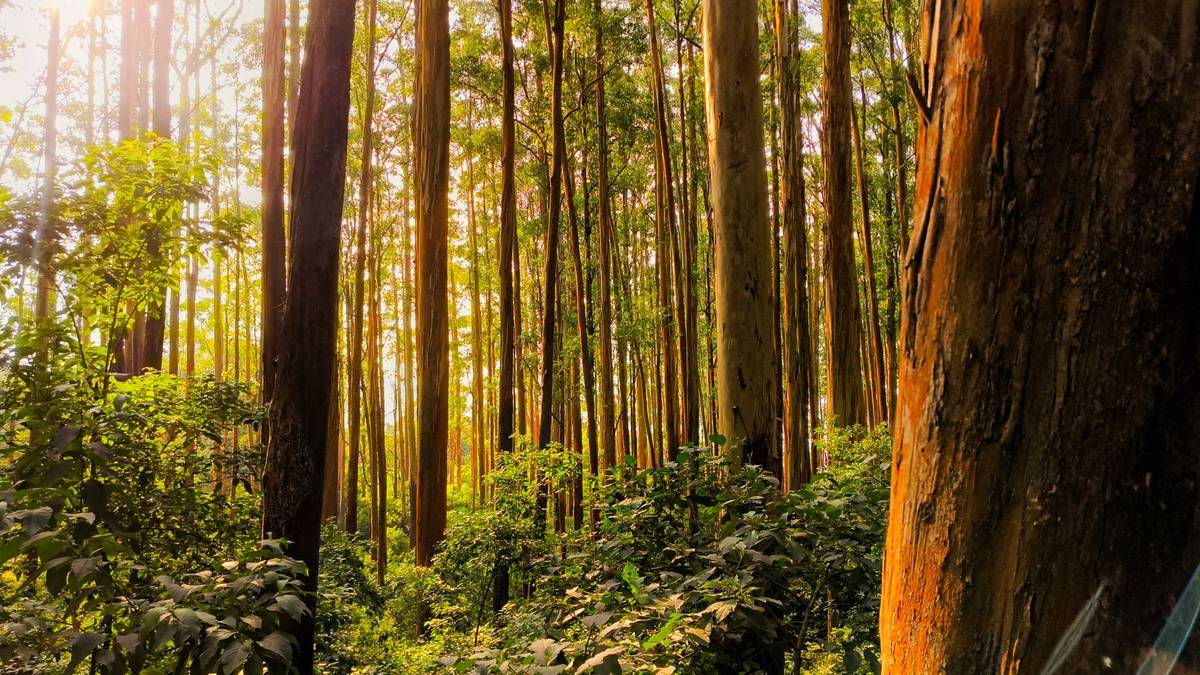
A forestry experiment that Australia set up in 1987 and then forgot has produced an answer nobody expected. Three decades after half to two-thirds of the trees were cut from plots of mountain ash in Victoria, those stands hold as much carbon as neighbouring forest that was never harvested. The trees left behind grew 20 percent thicker than trees in the untouched control plots.
That result cuts across a long Australian argument. Conservationists have said clearfelling, in which every tree in a block is removed, destroys habitat for rare species. Foresters have replied that mountain ash is adapted to the intense bushfires that flatten whole stands, and that clearfelling mimics them. The species grows more than 90 metres tall and can live over 400 years. Heavy thinning sits between the two positions, and its long-term result had never been measured.
The Victorian government funded the Silvicultural Systems Project in the mid-1980s, spending the equivalent of about 26 million Australian dollars today. Between 1987 and 1989, researchers laid out plots at Tanjil Bren in the Central Highlands and at Cabbage Tree Creek in East Gippsland. They compared wide clearfells of 250 to 350 metres, small patch cuts of 50 to 140 metres, heavy thinning that removed 50 to 70 percent of the trees, and unharvested benchmarks. By the early 2000s the young ash was regenerating best in the large clearfells. The findings were published, the access road grew over, and the project was abandoned.
What the trees did next
A University of Melbourne team returned to Tanjil Bren in 2014 with students. In the thinned plots the surviving trees, then about 80 years old, averaged well over a metre in diameter at chest height, and some exceeded 1.5 metres. Within 30 years those stands had regained all the carbon removed in harvesting and matched the gain of the untouched controls. Camera traps recorded Leadbeater's possums in every harvested treatment plot and in none of the unharvested areas, the researchers wrote in The Conversation. Thicker trees also survive fire better and are likelier to form the hollows that possums and greater gliders nest in. According to Yale Environment 360, the results appeared in the journal Forest Science.
The authors are careful about how far the finding travels. Thinning cannot and should not be done everywhere, they write, and no single method suits every forest: "There is no silvicultural silver bullet for managing forests." Their wider point is about the evidence itself. Australia's forests hold many abandoned long-term trials whose plots keep growing after the funding stops, and the answers they contain are lost unless someone walks back in to measure them.