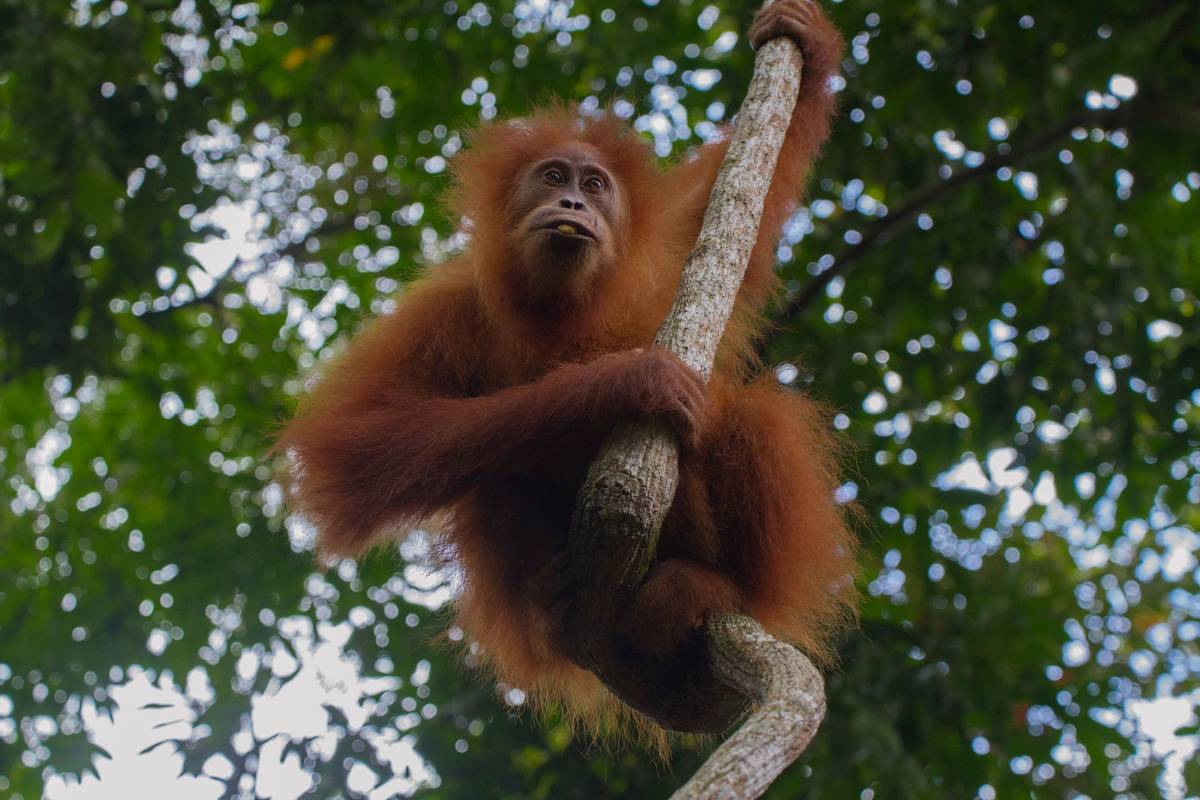
Fifteen years ago the Jantho Pine Forest Nature Reserve in Aceh, on the northern tip of Sumatra, held no orangutans at all. It now holds a small wild population, and that population is reproducing.
Fieldworkers recorded the tenth confirmed birth in the release area on 22 May 2026, Mongabay reports. They watched a female called Bulan move through the canopy carrying a male infant roughly a month old. Bulan had been taken from wildlife traffickers and returned to the forest seven years earlier. Indonesia's forestry minister, Raja Juli Antony, named the infant Badar, a word of Arabic origin meaning full moon. The mother's name means moon in Indonesian.
"From victim of illegal wildlife trafficking to a mother in the wild, Bulan's journey demonstrates the long-term value of orangutan rehabilitation and reintroduction," said M. Yakob Ishadamy, conservation lead at the Lestari Ecosystem Foundation, which runs the site together with the forestry ministry.
Indonesia established the release area inside the reserve in 2011. The Sumatran Orangutan Conservation Programme has since brought nearly 200 Sumatran orangutans there. Most were seized from the illegal wildlife trade or moved out of areas where deforestation had pushed them into contact with people. The forest holds a high density of fig trees, the animals' main food, and connects to the Leuser Ecosystem, where most surviving Sumatran orangutans live.
Years of relearning
Release is rarely straightforward. Young orangutans normally spend years alongside their mothers learning which fruits are safe, where food sits in each season, how to build a nest every night and how to cross a rainforest canopy. Animals separated from their mothers too early never learned any of it, the Good News Network notes. Rehabilitation can run for months or years. Conservationists release an animal only once it forages, climbs and nests without human help.
Not every reintroduction works. Jantho is proving an exception, and the births suggest the reserve is becoming self-sustaining. At least ten young have been confirmed, and more may be going undetected in dense forest.
The wider picture stays hard. A study in the September issue of the journal Global Ecology and Conservation puts the remaining wild population of Sumatran orangutans at 11,694, a drop of 19.5 percent between 2011 and 2023. Deforestation remains the main driver. In some areas numbers fell faster than forest loss alone explains, which the authors attribute to conflict with people and to habitat fragmentation.
"This is a warning that must be met with concrete action," said Syafrizaldi Jpang, executive director of the Lestari Ecosystem Foundation. Jantho's new population will keep growing only as long as the forest around it stays intact.