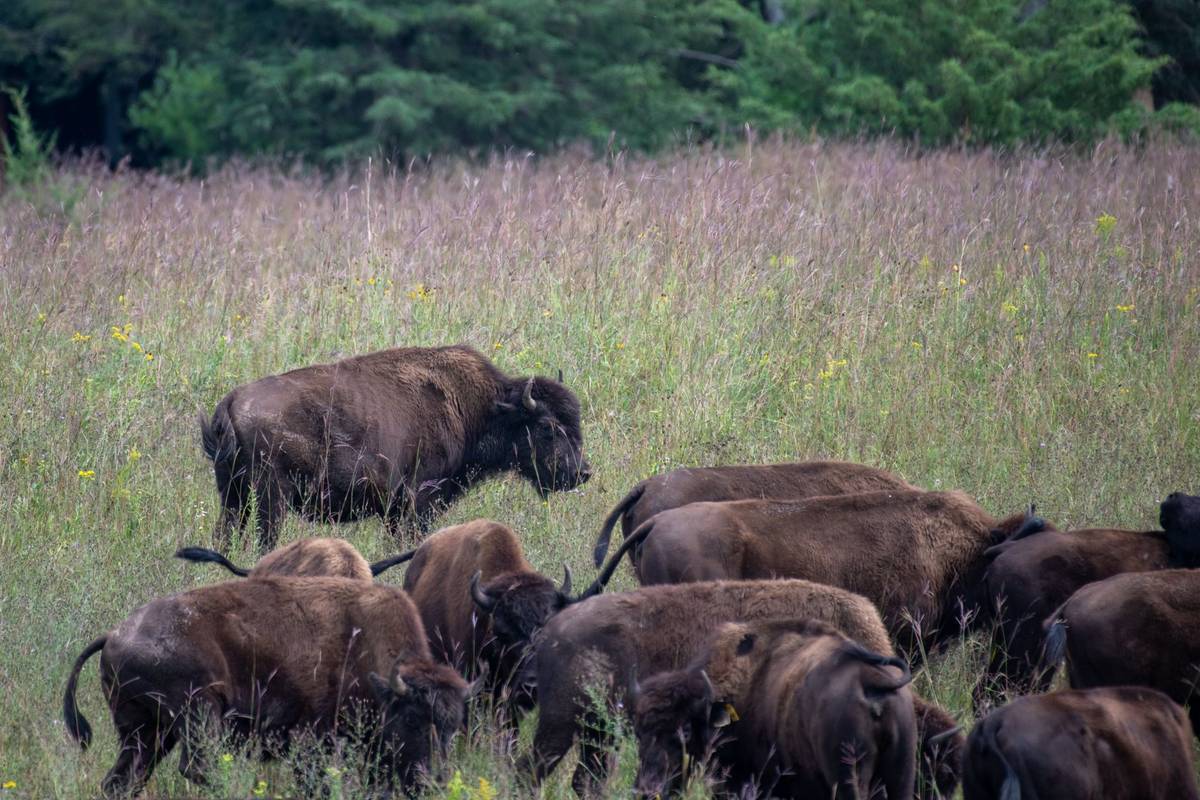
Conservationists have long feared that North America's bison paid for their near-extinction with their genes. A study in the journal Science suggests otherwise. Taken together, today's herds hold about as much genetic diversity as the animals that covered the continent before the 19th century.
The team sequenced 115 bison that died before the population collapse, some of them 20,000 years ago, along with 45 animals from the past century. Beth Shapiro of the University of California, Santa Cruz is the senior author. "Ancient DNA is rewriting the story of one of America's most iconic conservation successes," she said.
The collapse itself was severe. Millions of bison once shaped the grasslands of central North America and the lives of the Indigenous peoples there. By the early 20th century, hunting, habitat loss and a government-backed eradication campaign had left a few hundred. More than 20,000 now live in the wild, Anthropocene Magazine reports, largely on protected land such as Yellowstone National Park. Another 400,000 or so are raised commercially.
What changed, the genomes show, is not the amount of diversity but its distribution. Ancient plains bison were genetically similar wherever they lived, a sign that animals moved and bred across the landscape. Modern wild herds sit in separate pockets of land. At least four of them now carry their own distinct genetic signature. Isolation, not the crash, drove them apart, according to Discover Wildlife.
The case for one herd
The authors therefore argue for managing the remaining animals as a single population. Where fences and distance rule that out, reproductive methods such as artificial insemination could move genes between herds, much as cattle breeders already do.
A second worry proved smaller than expected. Roughly a third of the modern genomes carry traces of cattle, a legacy of crossbreeding attempts in the 20th century. Where those traces appear, they make up less than 2 per cent of the genome.
Wood bison are the more tangled case. They split from plains bison about 3,000 years ago. In the 1920s, Canada moved some 7,000 plains bison into Wood Buffalo National Park, then home to the last 1,500 wood bison. Every modern wood bison herd now carries plains ancestry, ranging from 7 to 64 per cent. "Wood and plains bison are substantially distinct, and should continue to be managed separately," said Greg Wilson, a bison ecologist at Parks Canada. Which animals to breed, and where to move them, is the decision the new genetic map is meant to guide.