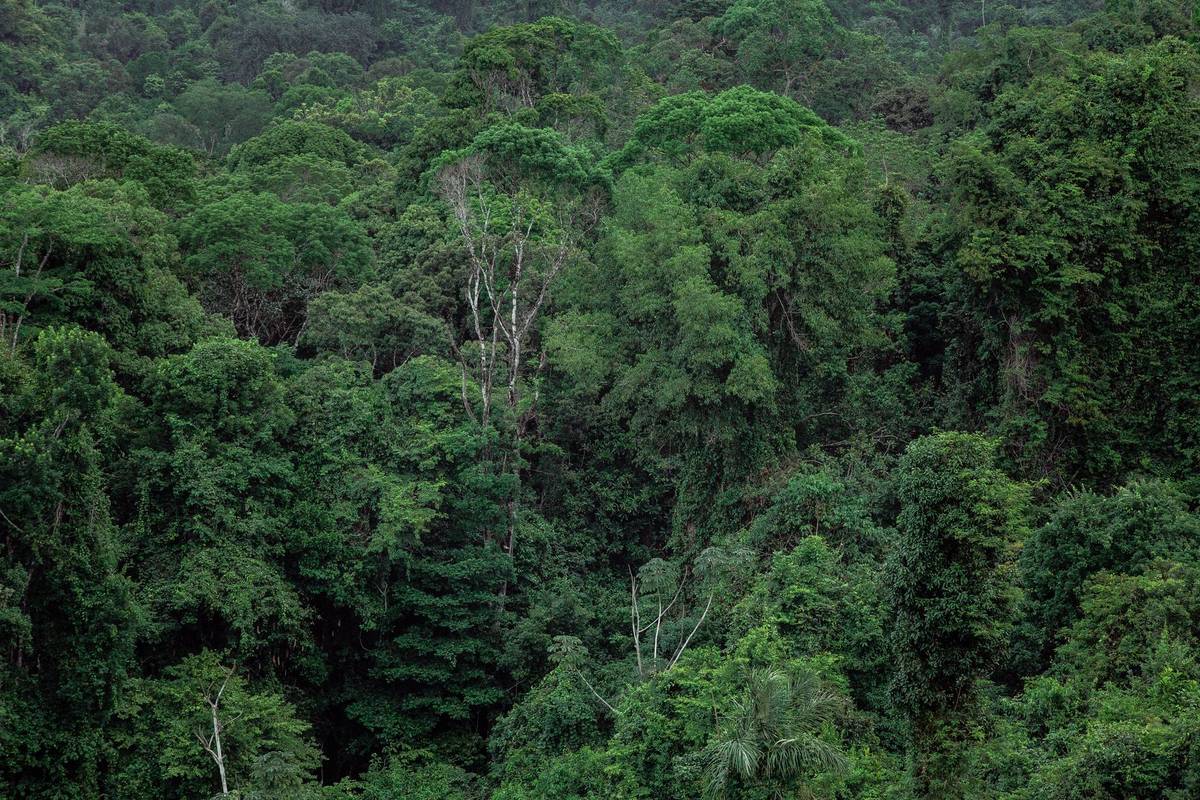
Camera traps on a set of rope bridges over roads in the Brazilian Amazon have recorded 15,000 crossings by tree-dwelling animals in 15 months. At the monitored sites, not a single animal was killed by a vehicle.
The bridges hang above roads in Alta Floresta, a city in northern Mato Grosso state. Mongabay reports that eight went up in 2024; the Smithsonian's Conservation Biology Institute, which hosts the project, counts seven installed late that year with eight more planned. Six primate species have used them. They include black-faced black spider monkeys, Schneider's marmosets and the Alta Floresta titi monkey, a critically endangered species that scientists only described in 2019.
Roads are a serious cause of death for wildlife in Brazil. Researchers estimate that nearly nine million mammals die on the country's roads each year. Arboreal animals face a particular version of the problem: a road breaks the canopy, and an animal that normally never touches the ground has to descend to cross.
Learning to trust a rope
The design does not assume every species moves the same way. Each bridge carries several layers of rope, so that animals can walk across, swing by their arms or use a prehensile tail. Cameras record the ones that turn back as well as the ones that cross, which is how the team learns what to change. Tufted capuchins took seven months before they used one bridge.
The project, called Reconecta, is led by the biologist Fernanda Abra, a postdoctoral fellow at the Smithsonian's Center for Conservation and Sustainability. It has built 39 canopy crossings since 2022 and won Abra a Whitley Fund for Nature award in 2024. The first 32 span the BR-174 highway, which runs through the Waimiri-Atroari Indigenous Territory. Members of the community helped choose the sites and test two competing designs. Animals preferred the structures that imitated trunks and branches.
Those bridges have logged around 1,250 primate crossings in five years, far fewer than the urban ones in Alta Floresta. The comparison is instructive rather than discouraging: it tells the team where animals are, and which designs they accept.
What is at stake is more than individual animals. A road that splits a population also cuts gene flow, and small populations suffer most. Fewer fruit-eating primates on one side of a road means fewer seeds carried into the forest there.
Brazil's transport infrastructure department has adopted the Reconecta design as its recommended standard for highways, and a bill establishing a national wildlife road-safety plan awaits a Senate vote. More bridges are planned in Alta Floresta, elsewhere in Brazil and in Suriname. Whether they keep working depends on something less photogenic than the crossings themselves: maintenance, and cameras that stay switched on.