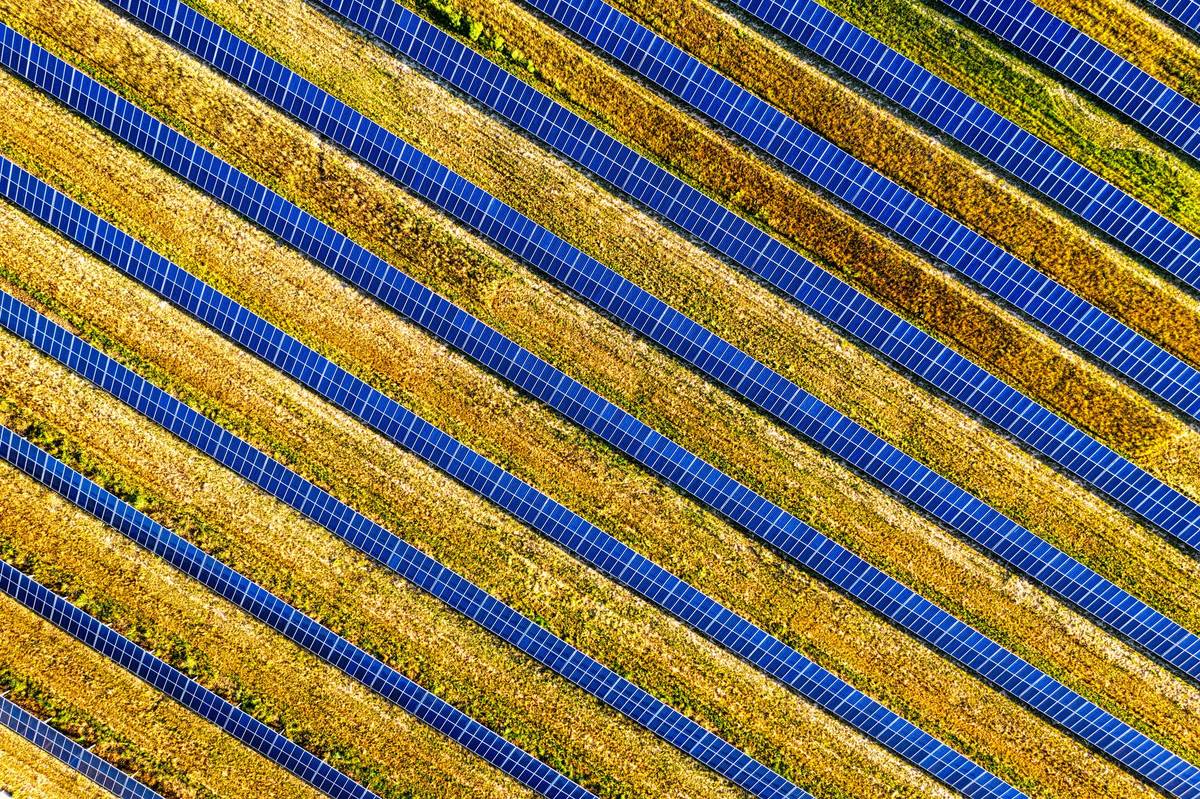
Construction has begun on what its developer calls the largest solar array ever built at an existing coal mining site in North America. The energy investment firm Panamint Capital broke ground in late July 2026 on Big Rooter Power, a $1.7 billion project in Robertson County, Texas, roughly halfway between Dallas and Houston.
The location matters as much as the size. Big Rooter is rising at Twin Oaks, a working power station with an adjacent surface mine at Calvert. Panamint bought both in 2023. Building on industrial land means the grid connection, the roads and much of the permitting already exist. It also sidesteps the disputes over farmland that have slowed solar development in rural America.
At 1.2 gigawatts, the array will be among the largest in the United States. The first phase, Big Rooter West, covers 491 megawatts and is scheduled to come online in August 2028. Work on the remaining 658 megawatts is due to start in December 2026, with power expected in August 2029. The 10,000-acre complex will also hold 1.6 gigawatt-hours of battery storage, more than 20 miles of new 345-kilovolt transmission lines and 790 megawatts of data centre capacity.
Coal stays on the site
This is not a coal-to-solar conversion. The 310-megawatt lignite-fired plant at Twin Oaks keeps operating and no retirement date has been announced, Electrek reported. Once the solar farm is complete, the property will carry roughly 1.5 gigawatts of coal and solar generation side by side. Grist reported that the mine continues to run as well.
"We believe deploying new capacity at existing energy sites is the clearest way to benefit communities, ratepayers, and the environment alike," said Apolka Totth, chief executive of Panamint.
The project is also a local employer. It will create more than 800 construction jobs, and Panamint estimates that the first phase alone will contribute over $66 million to the local economy over its lifetime, KBTX reported. First Solar will supply about 2 million panels made at its plants in Ohio, Louisiana and Alabama. SOLV Energy is building the array, the substation and the transmission works.
Texas is on course to produce more electricity from solar than from coal this year, according to Grist, pushed by demand from data centres, factories and air conditioning. Panamint says it has signed a long-term power purchase agreement running into the 2050s but has not named the buyer. That leaves the central question open: how much of this electricity will reach the wider grid, and how much will serve the data centres planned on the same land.