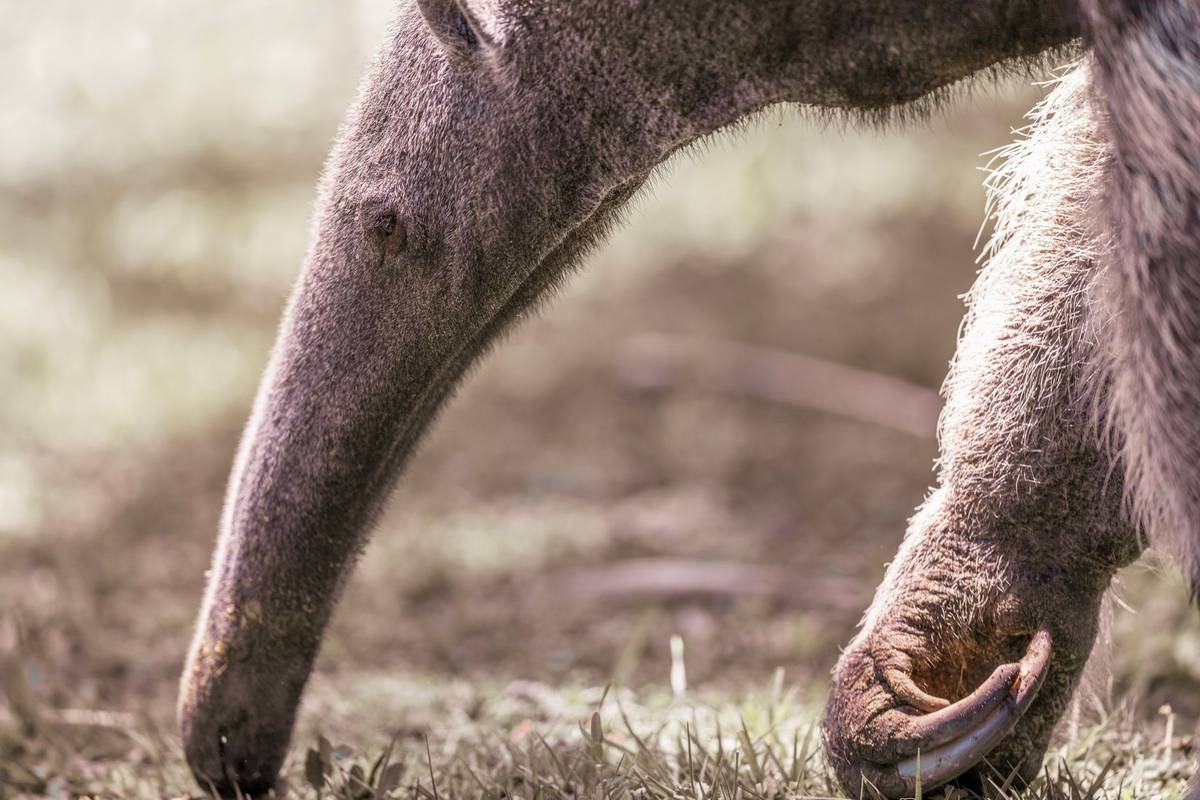
When the Fundación Rewilding Argentina began releasing giant anteaters into the Iberá wetlands in 2007, the species had been absent from the Argentine province of Corrientes for decades. Hunting, fire and the degradation of its habitat had wiped it out. Specialists at the time regarded its return as unrealistic. Nineteen years later, roughly 200 of the animals live wild in Iberá, and the population is still spreading.
The project was created with Tompkins Conservation and runs in cooperation with the Corrientes provincial government. It was the first attempt anywhere to reintroduce the giant anteater to a landscape it had vanished from. No template existed. The team had to write the scientific protocols for the region's large fauna from scratch.
The method was unglamorous and slow: rescue, rehabilitate, release. Around 110 animals were rehabilitated and set free in Corrientes. Many were orphaned, or had been picked up after straying too close to settlements. Some came from provinces as distant as Chaco, Formosa, Salta, Jujuy and Santiago del Estero. What turned that into a population was what followed. Multiple generations have since been born and raised entirely in the wild. Those wild-born animals, not the released ones, now make up the bulk of the count.
The population has crossed a border
The clearest measure of success arrived from outside Argentina. In August 2023, ecologist Fábio Mazim of the Pró-Carnívoros Institute spotted a giant anteater on camera-trap footage from Espinilho State Park in Rio Grande do Sul, in southern Brazil. The last living animal of the species recorded in that part of Brazil dated from 1890. Mazim had been hoping for a Pampas cat.
"We shouted and cried when we saw it," Mazim told Mongabay. "It took a few days to grasp the importance of this record." There have been 11 sightings since. Researchers cannot say whether they show one animal or several, but the conclusion is the same. The animals almost certainly dispersed across the border from Iberá. A reintroduced population has therefore grown dense enough to export individuals to a country where the species was considered gone.
The ecological payoff is concrete. Giant anteaters eat thousands of ants and termites a day, keeping insect populations from becoming destructive. Their digging also shapes the ground around them. Rewilding Argentina now treats the Iberá methodology as a working template for returning other missing herbivores and predators. A locally extinct large mammal can be brought back, then, if someone is prepared to spend two decades on it.