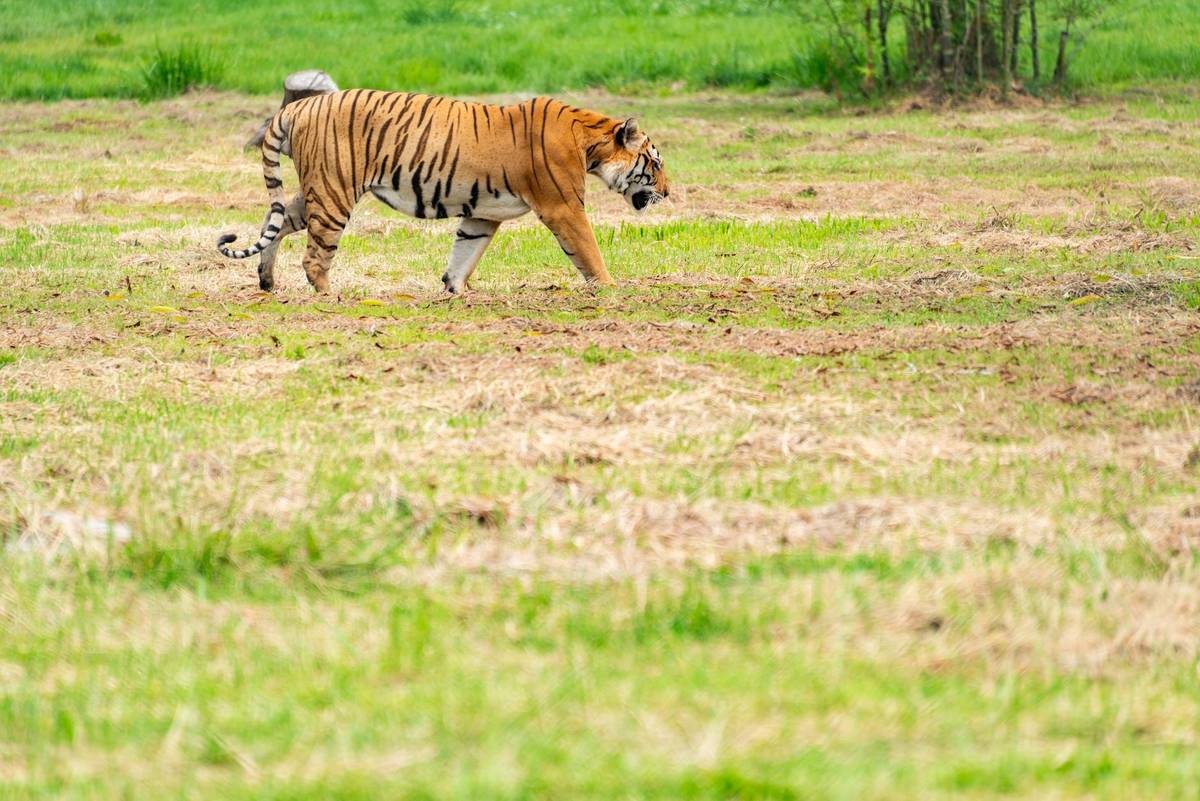
An adult Amur tigress named Umit stepped out of a transport crate on 31 July and into the open landscape of the Ile-Balkhash State Nature Reserve in south-eastern Kazakhstan. No tiger had roamed free in the country since 1948.
The release is the first practical result of a reintroduction programme that has run for more than a decade. Kazakhstan wants to rebuild a wild tiger population in a region where the animal was wiped out. If that works, it will be the first country in the world to manage it, according to Euronews.
Umit is one of four Amur tigers brought from Russia's Khabarovsk region in May 2026. Her name means "hope" in Kazakh. She spent two months in an adaptation enclosure while specialists watched her health, her behaviour and her hunting. The adult male from the same group is still being assessed. Two cubs, six months old on arrival, will stay in expert care until they turn 18 months.
"For the first time since the tiger disappeared from Kazakhstan more than 70 years ago, the first tiger has been released into its historical range," said Yerlan Nyssanbayev, minister of ecology and natural resources, at the ceremony reported by The Astana Times.
Ten years of groundwork
The animal was the last piece, not the first. Kazakhstan created the reserve in 2018 and then rebuilt the food chain. Bukhara deer were reintroduced, and kulans were later moved in from Altyn-Emel National Park. An adult tiger kills roughly 50 to 70 large animals a year, the country's Forestry and Wildlife Committee told Euronews.
The extinct Caspian tiger, also called the Turan tiger, once lived in the dense tugai forests along the Ili river. Genetic work identified the Amur tiger as its closest living relative. That is why the animals came from Russia.
The reserve is protected but not fenced, so Umit can leave it. She wears a GPS collar. Villages get a warning when a tiger comes within five kilometres, and a response team is on standby. "The safety of people living near the reserve is our top priority," the ecology ministry said.
Conservationists will call the project a success only once tigers breed on their own and the population survives without human help. Nyssanbayev described the release as a first and important step, with a great deal of work still ahead.
Two more tigers live in a large enclosure at the reserve. Kuma and Bohdana arrived in 2024 from the Stichting Leeuw sanctuary in the Netherlands and have spent their whole lives in captivity. They will not be released. Their role is to breed. If their cubs learn to hunt for themselves, those animals could follow Umit into the open.