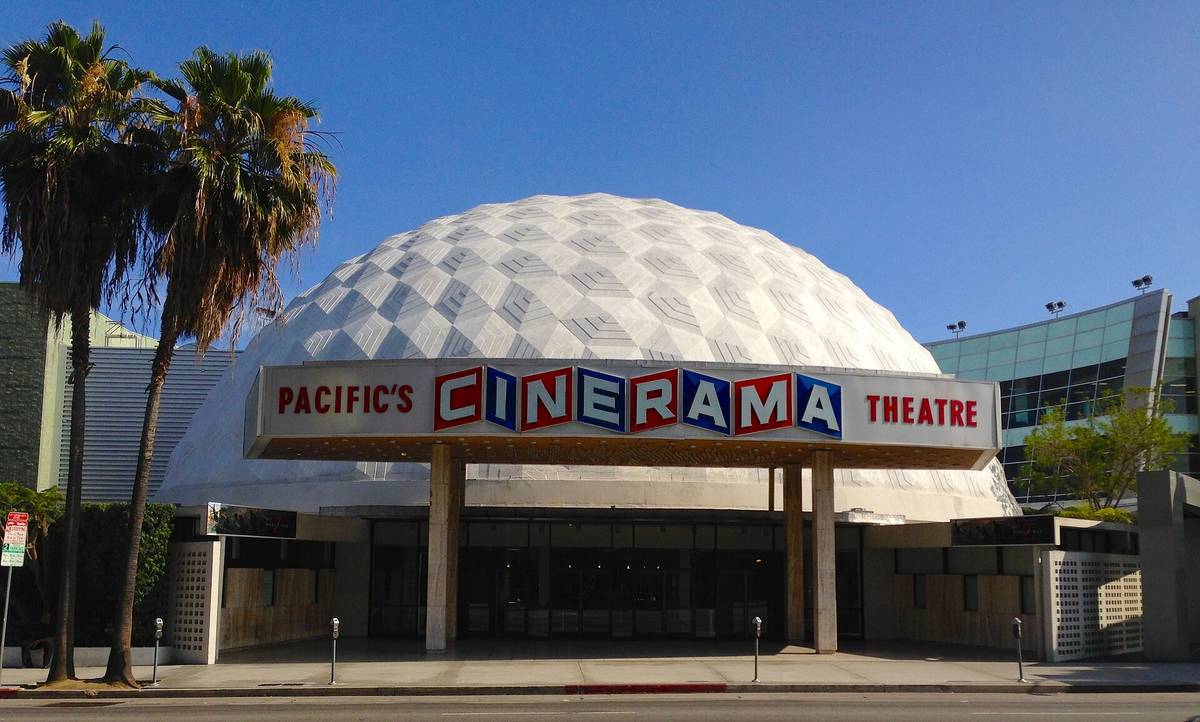
Sunset Boulevard's concrete golf ball is coming back. Sony Pictures Entertainment is taking over Hollywood's Cinerama Dome and will restore it for a reopening in early 2028, ending a shutdown that began with the pandemic in 2020 and hardened into what many Angelenos feared was permanent. Renovation work starts next month, and the theatre will be run by Alamo Drafthouse, the cinema chain Sony bought in 2024.
The Dome is a landmark twice over, as architecture and as film history. Opened in 1963, it was meant to be the first of some 300 similar venues worldwide; the rest were never built, leaving a single 956-seat auditorium beneath a roof assembled from 316 concrete hexagons and pentagons. Its 86-foot curved screen hosted showings of 2001: A Space Odyssey and Close Encounters of the Third Kind, and the building itself appears onscreen in Once Upon a Time in Hollywood. Los Angeles designated it a Historic-Cultural Monument in 1998.
Its closure was less a business decision than a collapse. Pacific Theatres, the chain built by William R. Forman, who put up the Dome in 1963, filed for bankruptcy in 2021 and announced that it and its sister brand ArcLight would shut every location. In the years since, moviegoers signed petitions and staged demonstrations to get the Dome opened again.
What changes, and what does not
Sony says the restoration will keep what people come for: the exterior and the Cinerama name, the Mid-Century Modern décor, the immersive large-format curved-screen presentation and a traditional concession stand. The Dome will not become a dine-in venue — unusually for Alamo Drafthouse, whose elaborate menus are part of its identity. The neighbouring 14-screen complex, the former ArcLight Hollywood, reopens at the same time under the Alamo name and does get the dine-in treatment; it keeps its 35mm and 70mm projection.
"Hot damn! We're bringing the Dome back, baby," said Tom Rothman, chairman and chief executive of Sony's Motion Picture Group, who framed the deal as investing in Hollywood literally as well as figuratively. Michael Kustermann, who heads Alamo Drafthouse and Sony Pictures Experiences, called the site the company's new West Coast flagship and promised programming and events to match.
Behind the nostalgia sits a wager on a habit that has proved more durable than expected. Cinema attendance has been recovering from the pandemic slump, and a Fandango study published this spring found Gen Z and millennial audiences to be the most active moviegoers, at roughly seven visits a year. The Dome's very first screening, in 1963, was It's a Mad, Mad, Mad, Mad World.