The Australian Museum in Sydney has returned the remains of 17 Rapa Nui ancestors to Easter Island. A German naval expedition removed them from burial sites on the island in September 1882. The museum bought them the following year and held them for more than 140 years.
They are not going into another collection. "For us, they are our ancestors. Each bone will go back to its original place. They will return to the ahu," Carlos Edmunds Paoa, president of the Council of the Elders of Rapa Nui, told The Art Newspaper. Ahu are the stone platforms on which the island's moai statues stand. A chief's bones were placed beneath one so that he would go on protecting his people through the statue above.
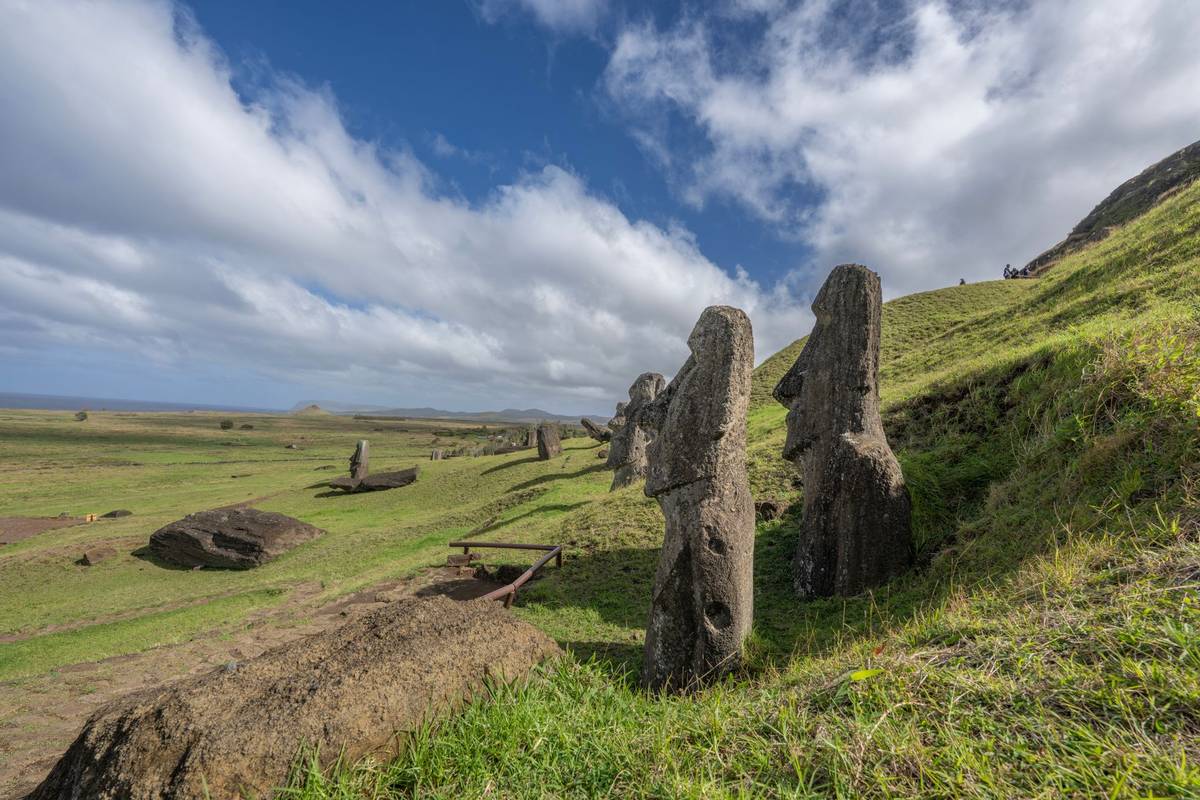
The expedition was led by Captain Wilhelm Geiseler, commanding the SMS Hyäne, and took the remains and a sample of human hair from Rano Raraku. Museums and private collectors across Europe, the United States and Australia were then competing for human remains from distant places. Much of that collecting was done in the name of race science, which has since been discarded as pseudo-scientific.
Two years of preparation
The handover followed two years of consultation between the museum, the Rapa Nui community and Australian and Chilean officials. At the ceremony in Sydney, the museum's director and chief executive, Kim McKay, apologised. "Our institution took part in the purchase of human remains, remains taken without consent from resting places that were never meant to be disturbed," she said. "This was wrong."
The remains arrived in Santiago on 17 July. Chile's undersecretary of cultural heritage, Emilio De la Cerda, led a ceremony at the airport before they were flown on to Rapa Nui, where islanders received them.
Father Francisco Nahoe, who coordinates repatriations to the Rapa Nui community worldwide, told the museum it had earned the respect of the island. "You've got to do the right thing," McKay told the AAP news agency. "There is no reason to hold on to First Nations ancestral remains in a museum in this day and age."
This return follows others. The Kon-Tiki Museum in Oslo sent back eleven boxes of remains and archaeological pieces in 2024, after earlier returns in 1986 and 2006.
The best-known object has not moved. Hoa Hakananai'a, a 2.4-metre basalt moai taken by the crew of the British survey ship HMS Topaze in 1868, remains one of the British Museum's main attractions. Edmunds Paoa accepts that it is well looked after in London. He also said the island will get it back.