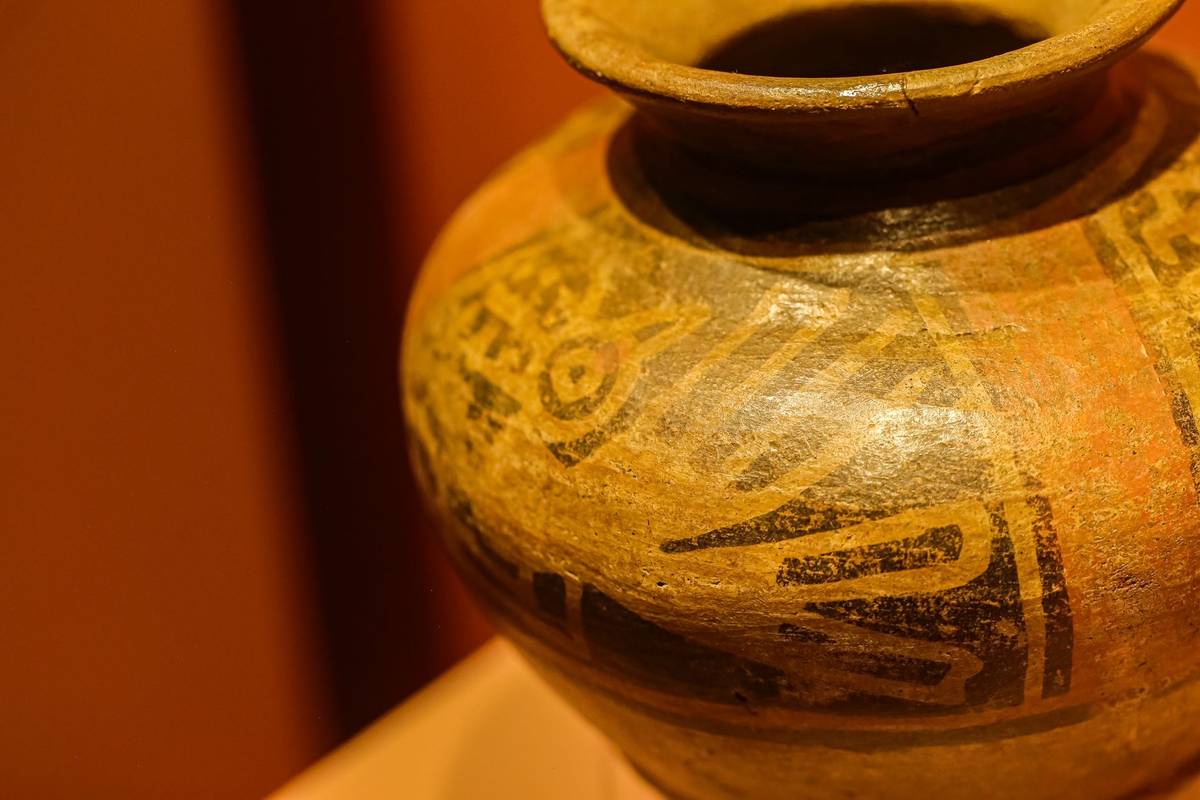
Painted clay vessels from the oasis of Qurayyah in north-western Saudi Arabia were an export hit with an unmistakable look some 3,200 years ago. An international team led by the archaeologist Marta Luciani of the University of Vienna therefore classifies them as an early brand. The study appeared in the journal PLOS One.
The evidence comes from finds at a pottery kiln in the oasis, Der Standard reports. The researchers examined the techniques used to shape the vessels, their chemical composition, and the residues left in the clay mixing basins. The team included Pamela Fragnoli of the Austrian Archaeological Institute at the Academy of Sciences and Johannes H. Sterba of TU Wien.
For the term brand the team drew up a set of criteria. The ware came from a single centre of production. It was technologically consistent and visually distinctive. It aimed at trade and travelled widely. And it was imitated elsewhere. The copies used different clay and were less finely painted. "So rather like Adidas knock-offs, if you like," Luciani told Der Standard.
Production began about 3,600 years ago and kept developing for four centuries. The workshops then commanded a large repertoire of red and black motifs. Lions, ibex, ostriches, foxes, dogs and lizards appear. Human figures are shown in movement and in rituals. Men have bare, muscular torsos, with a dagger or chariot reins fastened at the waist. Women dance in long robes, Luciani told The National.
Trade across hundreds of kilometres
The vessels went north into the southern Levant, to sites such as Tell el-Kheleifeh and the Timna sanctuary of the goddess Hathor, and south into northern Arabia. That account comes from co-author Doralice Klainscek, a doctoral student at the University of Vienna, speaking to The National. Output clearly exceeded local demand. The oasis kept its potting tradition for another thousand years, well into the late Iron Age.
The team also renamed the ceramics. Until now they were called "Midianite Pottery". "The earlier, mistaken label grew out of the wave of biblical archaeology, which liked to identify artefacts and pottery with a people," Luciani told Der Standard. Such an attribution assumes that every user belonged to the same ethnic group. That is almost never the case. The new name is "Qurayyah Painted Ware".
How many other brands existed in the Bronze Age remains open. Luciani stresses that the oasis dwellers took part in supra-regional networks of know-how despite scarce clay, water and fuel. Their conclusions, she says, reach beyond archaeology to the question of how producers and buyers found each other economically.