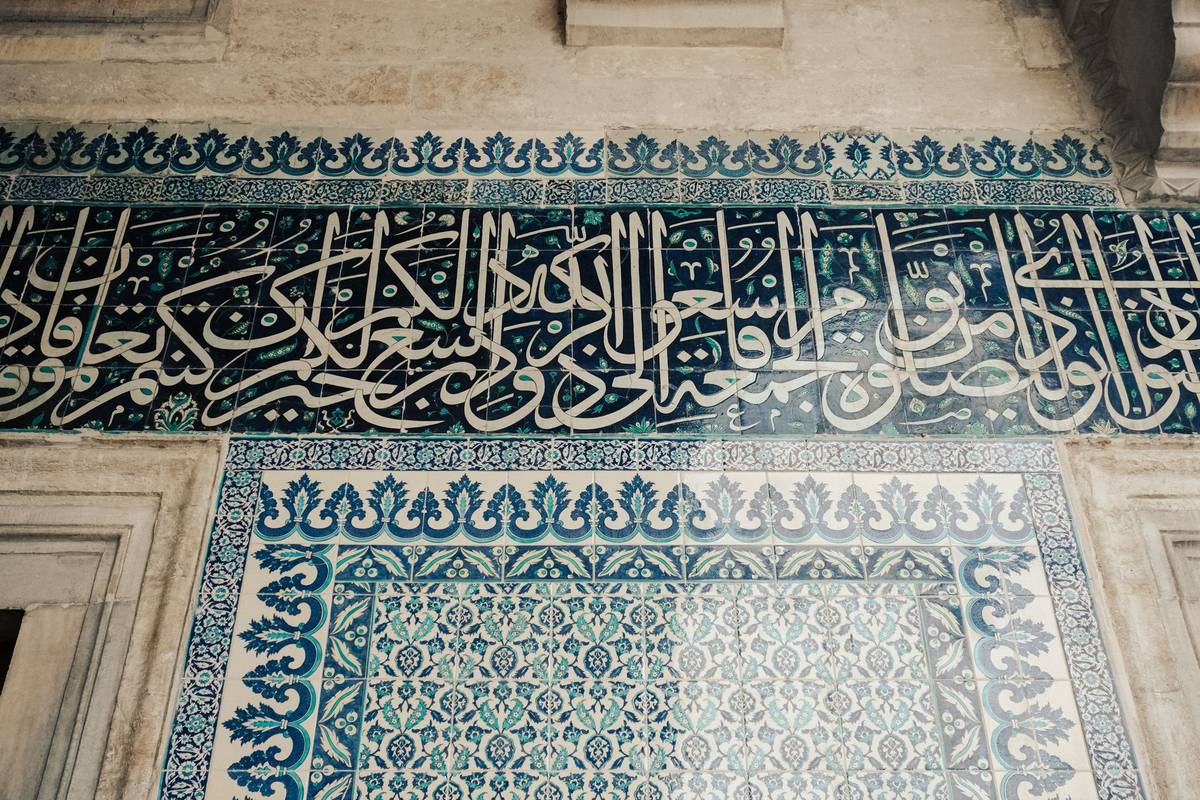
Twenty-six works from the Louvre's Islamic art holdings will travel to Washington this autumn. The Smithsonian's National Museum of Asian Art shows them in "From the Louvre: Masterpieces of Islamic Art" from 26 September to 18 January 2027.
Several of the objects have never been seen in the United States, and Washington is the only stop on the tour. Among them is the Lion of Monzón, a bronze from Islamic Spain made in the 10th or 11th century, and an unusually large decorated Ottoman bowl from around 1480. The loan spans the 7th to the 19th century and a geography reaching from present-day Spain to India. Paintings, ceramics, metalwork, jade, glass and architectural elements cross the Atlantic.
The exhibition asks how an object becomes a masterpiece at all. Its curators start not from European taste but from the vocabulary of the societies that produced the work.
"The word tuhfa means objects of extraordinary craftsmanship," said Simon Rettig, associate curator for the arts of the Islamic world at the museum, speaking to The Art Newspaper. He described a term that carries preciousness and rarity, and marks an object as fit to be given away.
That gift-giving is visible in the objects themselves. Two bejewelled ivory pen cases in the show were commissioned by the Mughal emperor Jahangir in the 17th century, then presented to the Safavid shah Abbas I and his grand vizier. The jeweller Louis Cartier acquired them in 1912.
A shared history between two museums
Some pieces trace a long link between the Paris and Washington collections. In the early 20th century the founder of the Washington museum, Charles Lang Freer, corresponded with the Louvre curator Gaston Migeon and the French collector Raymond Koechlin, ARTnews reports. A 16th-century Ottoman plate in blue and turquoise decorated with a peacock once belonged to Koechlin, sits in the Louvre today and is part of the exhibition.
Chase F. Robinson, director of the National Museum of Asian Art, said the objects were enjoyed by only a select few before they entered the Louvre. The show, he said, examines how masterpieces are shaped not only by their makers but also by the public that celebrates them.
That framing points at an uncomfortable part of the story, which the exhibition also takes on: the often roundabout paths by which the pieces reached a Paris museum in the first place.