The calculation an international research team has run turns a familiar argument on its head: it is not remaking the food system that is expensive, it is carrying on as we are. Ten global models compared where agriculture is heading by 2050 if nothing changes, and where it would end up if the world shifted step by step towards healthier, more sustainable eating. The work appears in Nature; it was led by Cornell University, with contributions from the Potsdam Institute for Climate Impact Research (PIK) and the model comparison project AgMIP.
The starting point is a mismatch. Food systems account for roughly a third of global greenhouse gas emissions and are the main driver behind five planetary boundaries being exceeded. About a third of all food is lost between field and plate or thrown away, while half the world's habitable land is farmed – mostly for livestock and animal feed. According to the 2025 EAT-Lancet report, a flexitarian "planetary health diet" adopted globally could prevent around 15 million premature adult deaths a year.
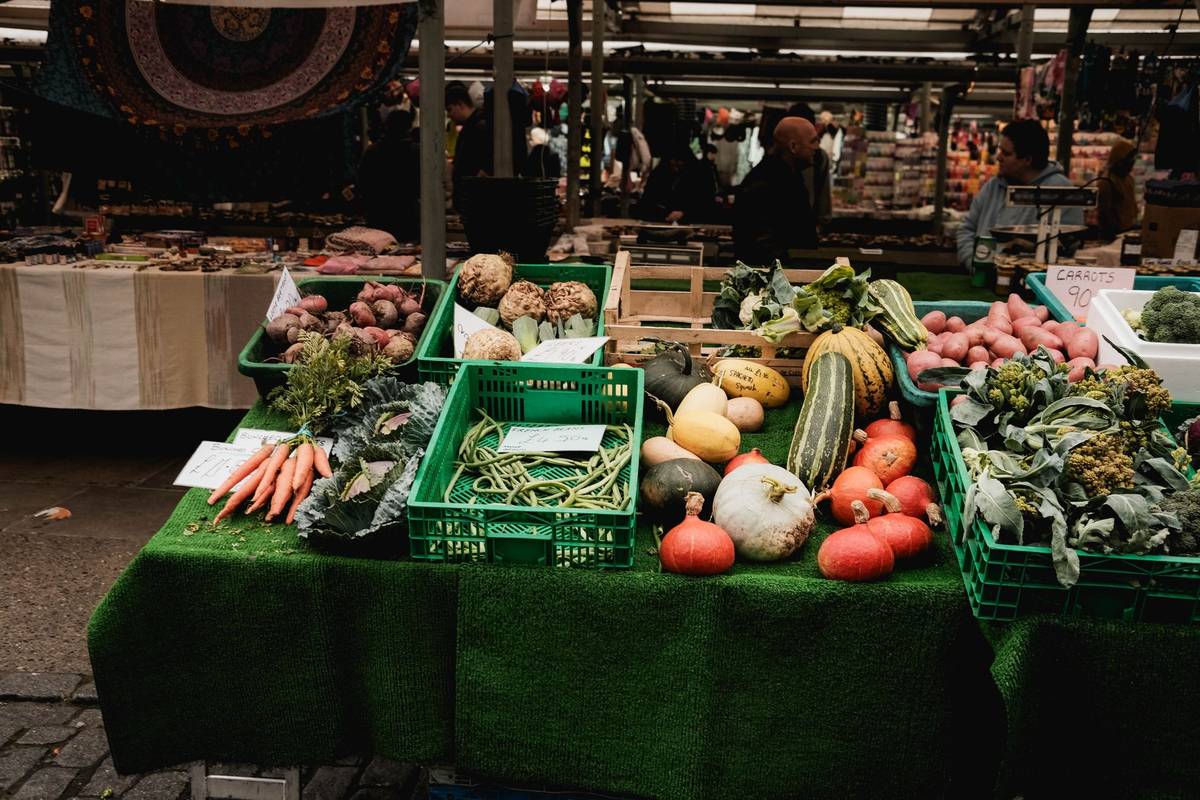
The study's transformation scenario combines three levers: more plant-based food on the plate, higher agricultural productivity without new land, and food waste cut in half. In the models they are phased in gradually, as they realistically would be.
What would shift by 2050
Against the business-as-usual path, global farmland use in the models falls by nine per cent, the production value of livestock farming by 60 per cent and total agricultural output by 17 per cent – with the decline coming almost entirely from animal husbandry. Set against that is growth elsewhere: the production value of vegetables, fruit, nuts and pulses rises by a median of 23 per cent. Numbers of cattle, sheep and goats raised for meat fall back in the model to a level last seen in the mid-1990s. Pasture shrinks most sharply, by around ten per cent or roughly 274 million hectares – the largest absolute reduction in area, according to the authors.
For the climate the effect would be substantial. Net CO2 emissions from agriculture-driven land-use change would fall by 76 per cent, and direct non-CO2 greenhouse gases from production by a third.
"Our study shows that continuing on the current path is the more expensive option," says Hermann Lotze-Campen, head of the climate resilience research department at PIK and a co-author. Providing healthy diets for a growing world population would keep the overall value of agricultural production near its 2020 level by 2050, at markedly lower environmental and health costs. Lead author Matt Gibson, now at the London School of Hygiene and Tropical Medicine, coordinated the work while at Cornell.
The distribution is not glossed over: the losses would fall in concentrated form on rural economies built around livestock, while the health and environmental gains are spread widely. That is precisely the political task – and, as Florian Zabel of the University of Basel stresses, the opportunity to put farming on a fundamentally greener footing.