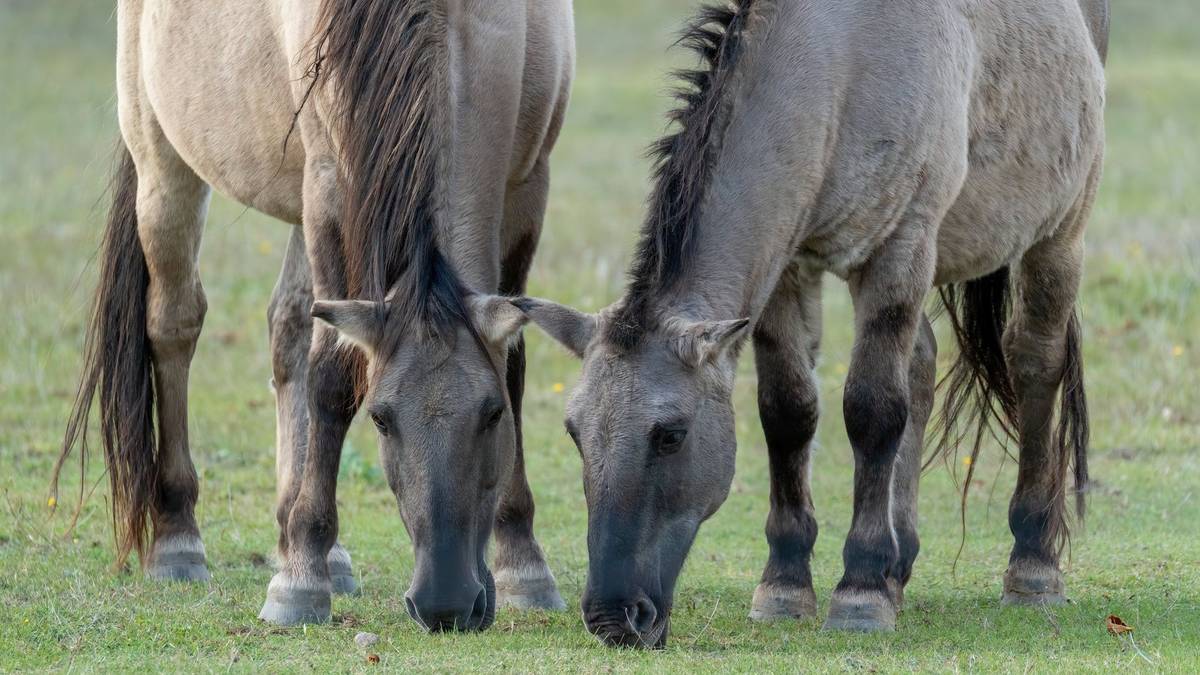
An animal that did not exist in the wild for half a century is once again finding its own water and food in central Kazakhstan. In late May 2026, conservationists released five Przewalski's horses – one stallion and four mares – into the Altyn Dala steppe. It is the second year running that the international project has returned European-bred animals to the wild.
The real evidence of success lies not in the release date of 25 May, but in the twelve months before it. The horses had been flown to Kazakhstan in June 2025 from Wildnispark Zürich in Switzerland and Hungary's Hortobágy National Park, and first lived in an acclimatisation enclosure. There they came through a Kazakh winter, learned to dig for food in deep snow, and located natural water sources without human help. Two of the mares now wear satellite collars, allowing their movements through a roughly 40,000-square-kilometre network of protected corridors to be tracked without disturbing the herd. Early readings show the group is still staying near the reintroduction centre.
The steppe had to return first
The comeback is only possible because the landscape itself was repaired over decades. The Altyn Dala, or "Golden Steppe", counts among the last large intact grasslands on Earth – yet in the Soviet era intensive wheat farming exhausted its soils. Saiga antelope, kulan and wild horse vanished through habitat loss and poaching. With backing from the Kazakh government, more than 20 years of work produced five large protected areas covering together roughly the area of Brandenburg, plus a safe migration corridor for herds of hoofed animals.
"After they were wiped out there, that is, after 200 years, the Przewalski's horses are now native again in their original range," says geoecologist Michael Brombacher of the Frankfurt Zoological Society.
Why it matters beyond the species: the wild horses shape the landscape. Their grazing keeps the steppe open and so maintains habitats that many other species depend on – including the wetlands within the grassland steppe that are important for migratory birds.
The next arrivals are already organised. Animals brought from Berlin to Kazakhstan in 2024 have settled in and, together with further horses from European zoos, formed the region's first herd. For early summer 2026, Tierpark Berlin is preparing the next transport: four of eight wild horses are due to begin their journey in Berlin. "That we can see wild horses again today in this ecologically so important grass steppe is a success of international and interdisciplinary cooperation and of decades of scientifically coordinated conservation breeding," says Christian Kern, zoological director of Berlin's Zoo and Tierpark.