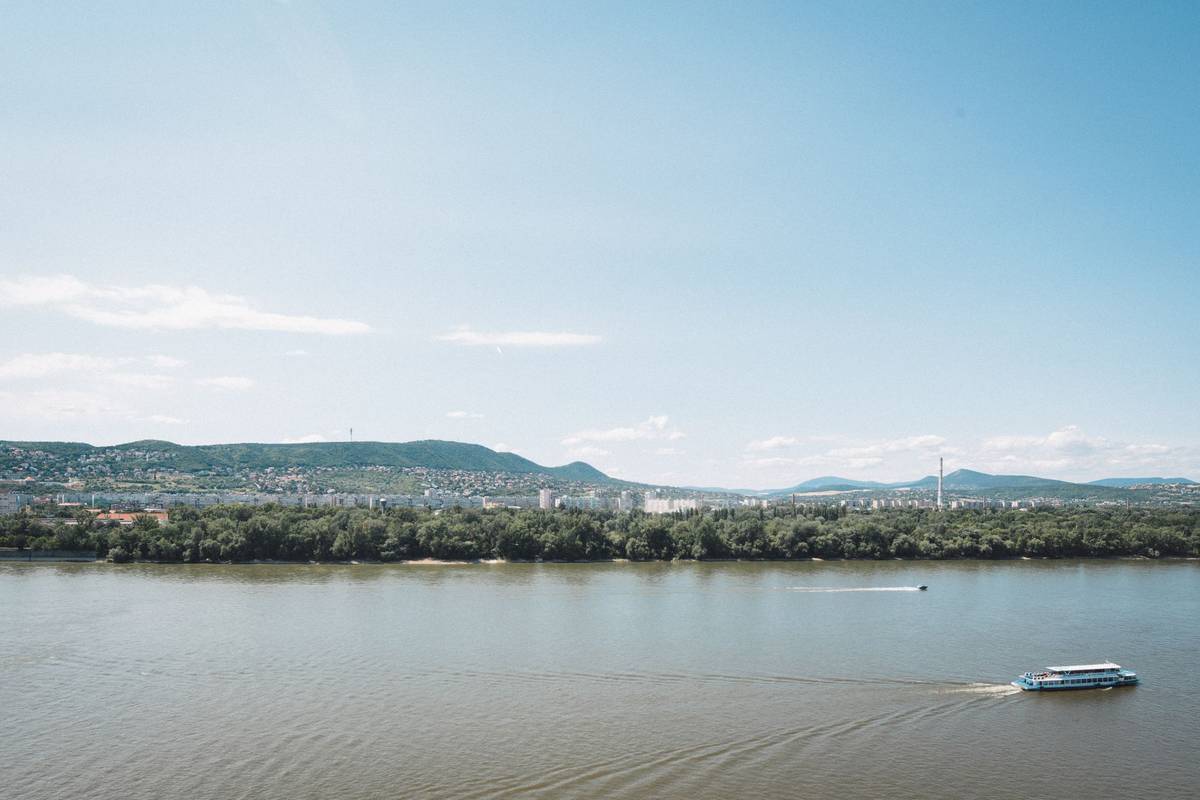
The Danube links ten countries, covers some 2,850 kilometres from Donaueschingen to the Black Sea and supplies drinking water to about 20 million people. Just how much microplastic it carries along the way, nobody yet knows precisely. This summer that is meant to change: since 4 July, a team from the non-profit organisation Wasser 3.0 has been taking samples along the entire course of the river for its "Danube 2850" project – more than 250 of them by the time it reaches the mouth.
The measuring campaign comes with a feat of endurance attached. Joseph Heß, a 39-year-old long-distance swimmer from Dresden, intends to swim the Danube over its full length. After a symbolic start at the source in Donaueschingen, the actual route began in Ulm; from there more than 2,600 kilometres lie ahead of him. He has set himself around 50 kilometres a day with no rest days, escorted by two kayaks and sleeping in a camper van. "I'm looking forward to what is still to come: ten countries, four capitals," Heß said during a stop in Donauwörth. The river's currently low water level is not making the swimming any easier.
Measuring microplastic in Europe's waters is nothing new – the Danube has been the subject of studies, large EU research projects and citizen-science programmes with thousands of participants. What is new is the unbroken scale. The real shortcoming in microplastic research is not a lack of measurements but measurements that can barely be compared with one another.
Why the numbers have been so hard to compare
Microplastic means plastic particles smaller than five millimetres. They form when larger waste breaks down, when tyres abrade, when textiles shed fibres in the wash or when plastic pellets are lost on their way through industry and transport. The particles differ in size, shape, material, density and origin: some drift at the surface, others sink into the sediment, still others are taken up by organisms. A surface sample therefore says something different from a sediment sample, a coarse mesh captures something different from a fine one – and a single sampling point cannot represent a 2,850-kilometre river in any case.
Europe is not standing still: since October 2023, the EU has restricted deliberately added microplastic under the REACH regulation, in cosmetics, cleaning agents, fertilisers or sports-pitch surfaces among others. What is missing is comparable data on where the particles actually occur and in what quantities, and the political conclusions drawn from it. A river whose basin is home to more than 80 million people is a good place to start.