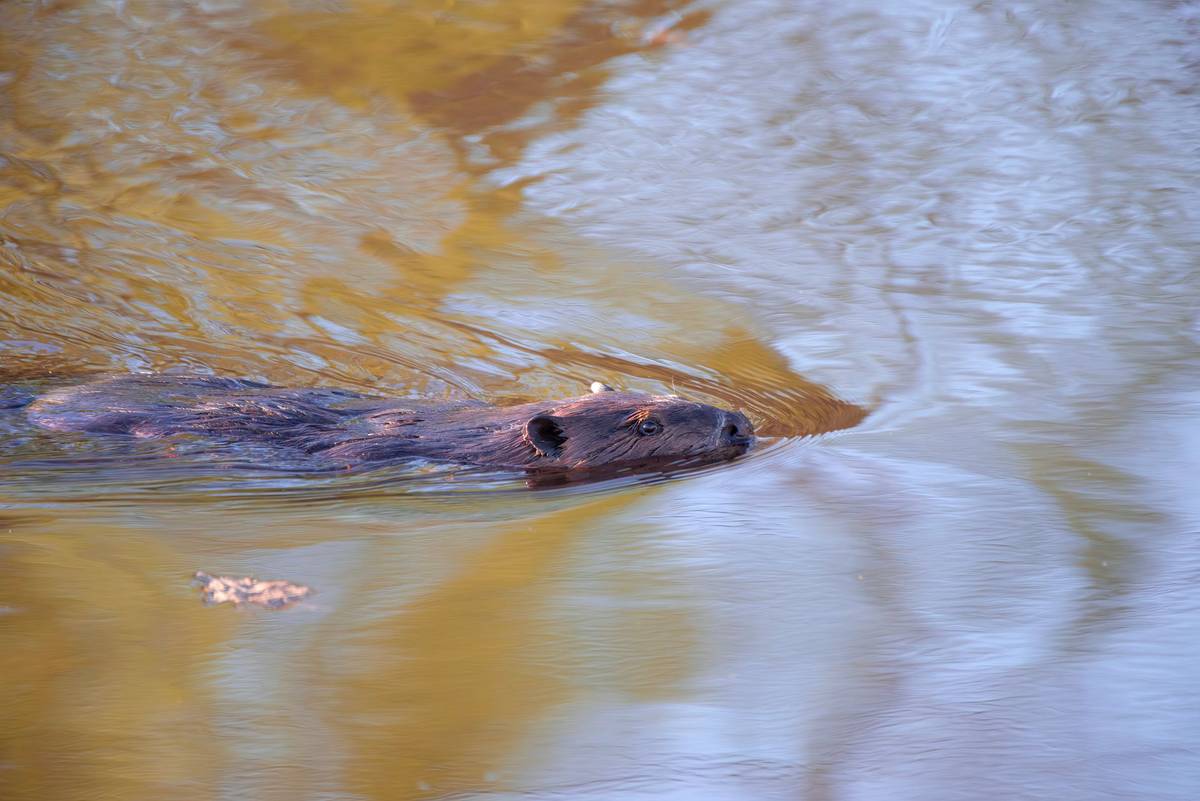
Beavers are famous as animals of rivers, lakes and quiet streams. A new study says that picture is far too narrow: the rodents are also thriving in the salty, tide-swept estuaries of the Pacific Northwest — and their engineering could help imperilled salmon.
Gregory Hood of the Skagit River System Cooperative surveyed tidal wetlands and river deltas across coastal British Columbia, Washington and Oregon, places where twice-daily tides push seawater inland and where beaver biologists rarely think to look. Writing on 8 July in the journal PLOS One, he reports that North American beavers (Castor canadensis) are widespread there — and unexpectedly busy. In surveyed channels of the Snohomish and Skagit rivers he counted an average of 19 dams and two lodges per kilometre, more than double the dam density previously recorded on non-tidal rivers.
The tidal dams look different from their inland cousins. They are shorter, and at high tide the sea simply flows over them. That suggests their real job is not to hold back a river but to trap pools of water at low tide, letting the animals move freely through channels that would otherwise drain. The dams may also blunt the intrusion of saltwater. And they endure: comparing historical aerial photographs on Google Earth back to 1990, Hood found an estuarine dam that had stood for at least 35 years, across multiple generations of beaver.
Why it matters: those low-tide pools are potential lifelines for fish. Hood argues the beavers carve out refuges that could shelter threatened runs of salmon, including Chinook and coho, in estuaries badly degraded by habitat loss. In other words, an animal often written off as a nuisance may be doing conservation work for free.
The findings widen the map of where a keystone species can live and hint at an ecological role scientists have overlooked. Hood is not done: with biologists from the Tulalip Tribes he has fitted one tidal beaver with a GPS tag to trace its movements through near-impassable swamp, and hopes to tag 20 more. The conventional view, he notes, is that beavers "live exclusively in rivers and lakes" — an assumption his survey firmly overturns.