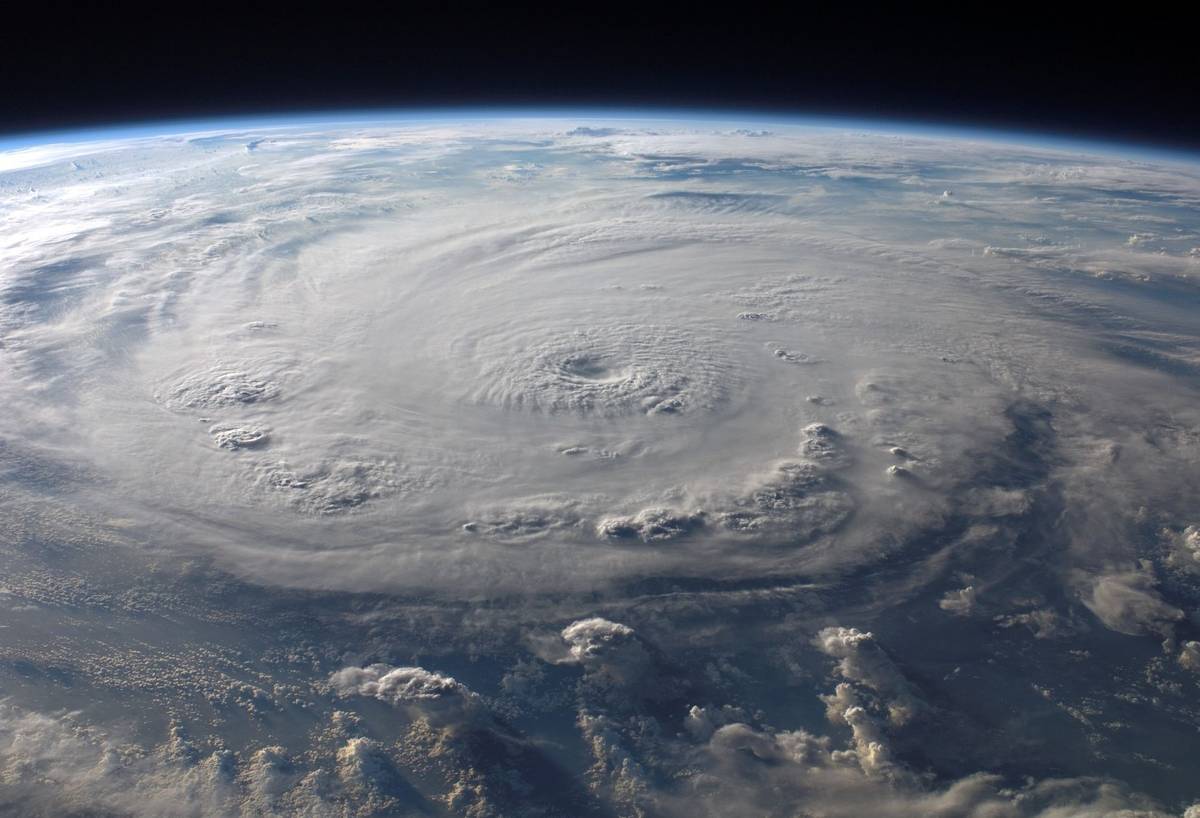
An artificial-intelligence system gives cyclone forecasters roughly an extra day of warning, according to a study published in the journal Nature.
The system is called WeatherNext Cyclones. Researchers at Google DeepMind built it, and it predicts the track, the strength and the size of tropical cyclones anywhere in the world. Its forecasts reach up to 15 days ahead. The team measured it against storms recorded between 2023 and 2025.
Across those storms its predictions arrived on average a day or more earlier than those of the leading operational models. The authors set that gain against the field's own history. It matches what conventional forecasting achieved over an entire decade of development.
Two design choices break with established practice. Regional storm models work at very fine spatial resolution. WeatherNext Cyclones uses input data orders of magnitude coarser and still holds its own on intensity. That points to more information about a storm's strength sitting in coarse atmospheric data than researchers had assumed, the study argues.
The second choice is sheer scale. Conventional systems run about 50 variants of a forecast to gauge how uncertain it is. The AI model can run up to 1,000. Rare and extreme outcomes surface more reliably in the larger set, the authors report. Adding the model to a weighted consensus of existing forecasts also improved that consensus.
Google DeepMind's cyclone work has already faced real storms. During the 2025 Atlantic hurricane season the US National Hurricane Center added AI models to its usual set of tools, among them the DeepMind system, CNN reported on 3 December 2025. Forecasters credited it with help on the hardest part of the job, the moment when a storm strengthens very quickly.
Before Hurricane Melissa struck Jamaica as a Category 5 storm, the model gave forecasters unusual confidence in exactly that rapid intensification, some three days ahead. According to CNN it was the first time the National Hurricane Center had called a Category 5 from the moment a system formed as a Category 1.
The first live trial had come earlier, during Hurricane Erin. "The Google DeepMind model did it a little bit better than any of the other ones," James Franklin, a former chief of the National Hurricane Center's Hurricane Specialist Unit, told CBS News Miami.
Forecasters stay deliberately cautious about single storms. Wallace Hogsett, science and operations officer at the National Hurricane Center in Miami, told CNN that performance across a full season matters far more than any one case.