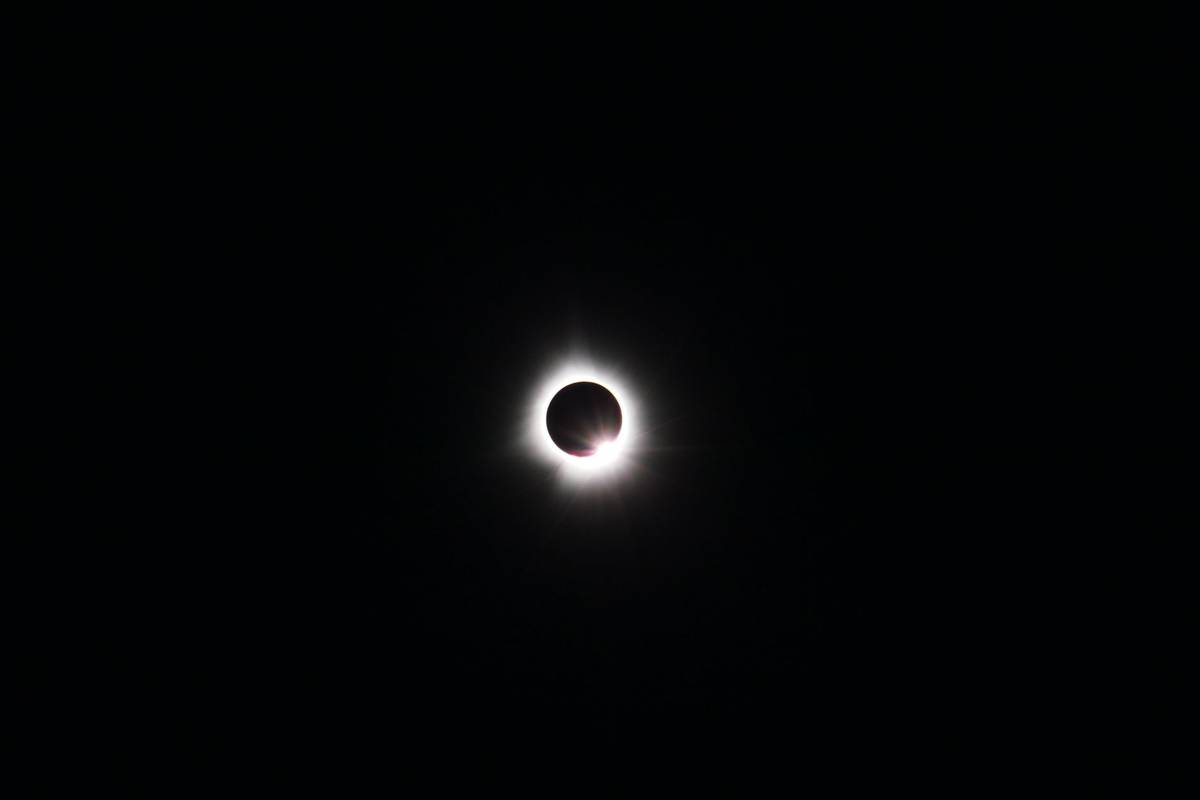
On the evening of 12 August 2026 the moon's core shadow reaches northern Spain. It is Spain's first total solar eclipse in more than a century, the Guardian reports.
The path of totality begins over the Arctic, according to wissenschaft.de. It runs across Greenland, Iceland, northern Spain and the Balearic Islands. At any fixed point, totality lasts only about two and a half minutes.
That puts the event within reach of millions of people in Europe. The Spanish corridor stretches from A Coruña in the north-west to Mallorca. Officials expect as many as six million people in the shadow path, the Guardian reports.
An estimated 460,000 visitors have travelled to Spain for it. More than 300,000 of them plan to head for rural areas. Hotels report bookings from Japan and the United States, some made months in advance.
"A total solar eclipse is one of the best spectacles in nature," says César González, an astronomer and science communicator at the Madrid Planetarium.
Germany sees a deep partial eclipse
Germany lies outside the core shadow. There the moon covers 88 to 90 percent of the solar disc, wissenschaft.de reports. The eclipse starts between 19:11 in northern Germany and 19:25 in the south.
The maximum falls at about 20:05 in the north and roughly ten minutes later in the south. The sun stands low in the west by then. A spot with a clear view westwards is therefore necessary.
An obscuration this deep will not return over Germany until 3 September 2081. A total solar eclipse will then cross the south-west of the country.
Anyone watching needs certified eye protection. The magazine Spektrum der Wissenschaft warns explicitly against improvised solutions. Soot-blackened glass and stacked colour filters do not hold back infrared and ultraviolet radiation. Those invisible components can damage the retina permanently.
Projection is safe. Binoculars can cast the image of the solar crescent onto a bright wall. Narrow gaps in a blind also produce many small crescents inside a room.
The weather remains open. Spain has warnings of temperatures up to 40 degrees Celsius and a high risk of wildfires. About 24,000 police officers are on duty, and the authorities expect up to 1.5 million extra car journeys.