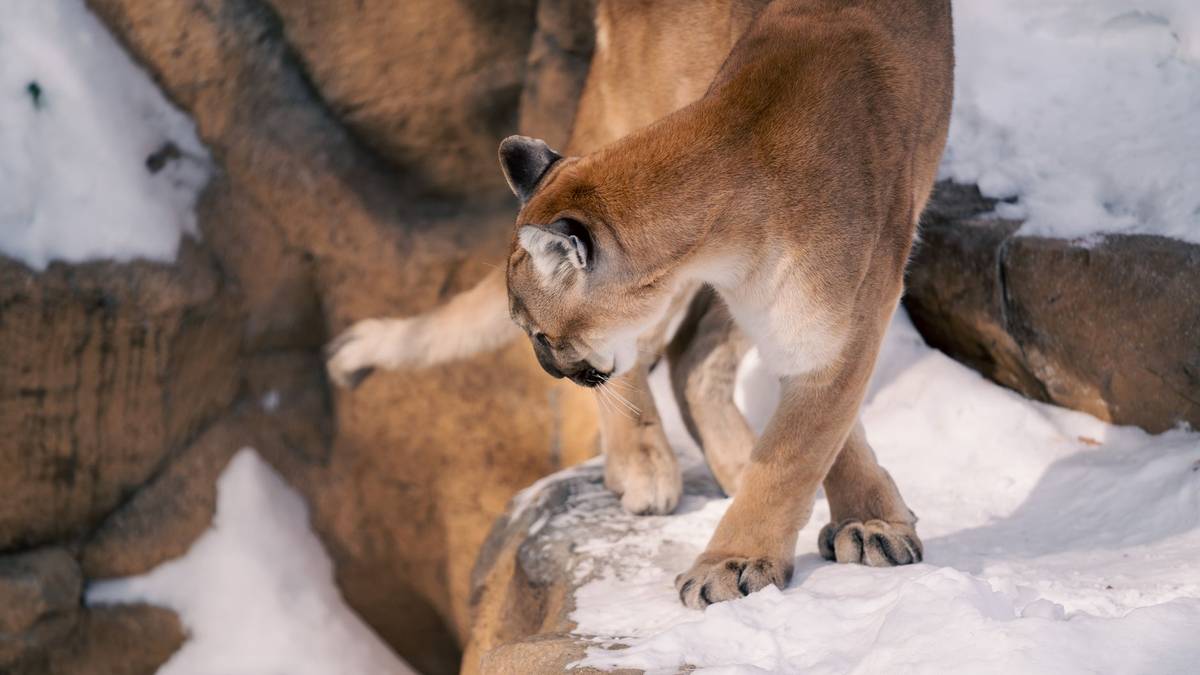
Drivers on Washington state's Olympic Peninsula are 67 percent less likely to hit a deer in places where pumas roam frequently. That figure comes from a study in Current Biology that paired the movements of the big cats with five years of crash records.
The finding turns a familiar fear on its head. Public debate about living near mountain lions is almost entirely about the danger they pose. On this peninsula, the deer are the greater hazard to drivers, and the cats reduce it.
The evidence took years to assemble. Wildlife cameras at more than 500 sites tracked deer, and GPS collars on 59 mountain lions tracked the predators. Much of that monitoring grew out of long-running work by the peninsula's tribes, and scientists from the Lower Elwha Klallam, Skokomish, Quinault, Makah and Port Gamble S'Klallam nations took part in the research.
The team then matched those data against nearly 1,000 vehicle collisions with wildlife recorded on the peninsula between 2020 and 2025. Those crashes caused more than 80 injuries and two deaths, and cost 14.7 million dollars in vehicle repairs and medical care.
Where the crashes happened made no sense at first
Neither deer abundance nor the level of development and traffic explained the pattern of collisions. The picture only resolved once the researchers added the collar data. A model of the interactions between cats, prey and motorists put the drop in expected collisions over five years at 76 percent in areas of heavy puma activity.
The mechanism is behavioural rather than a matter of numbers. Deer do not simply die out where pumas hunt; they move differently.
"Deer alter their use of both space and time where pumas are present, overlapping less with roads and reducing activity at night, when some of the most dangerous collisions occur," said the lead author, Justin Suraci, an ecologist at Conservation Science Partners in Truckee, California.
The pattern echoes the best-known case of a predator reshaping a landscape, the wolves that changed elk behaviour and let vegetation recover in Yellowstone. Here the chain runs through an element no ecosystem evolved with, the car.
"Living alongside large carnivores isn't simply about protecting wildlife; it's about protecting the many ways they quietly benefit us every day," said Mark Elbroch, who heads mountain lion research at the conservation group Panthera and worked on the study.
The result rests on one peninsula and on a statistical model, not on an experiment, and Nature's write-up of the work calls the puma an indirect friend rather than a proven road-safety measure. What it does supply is a number that can enter a debate usually conducted without one, wherever hunting quotas for pumas are set.