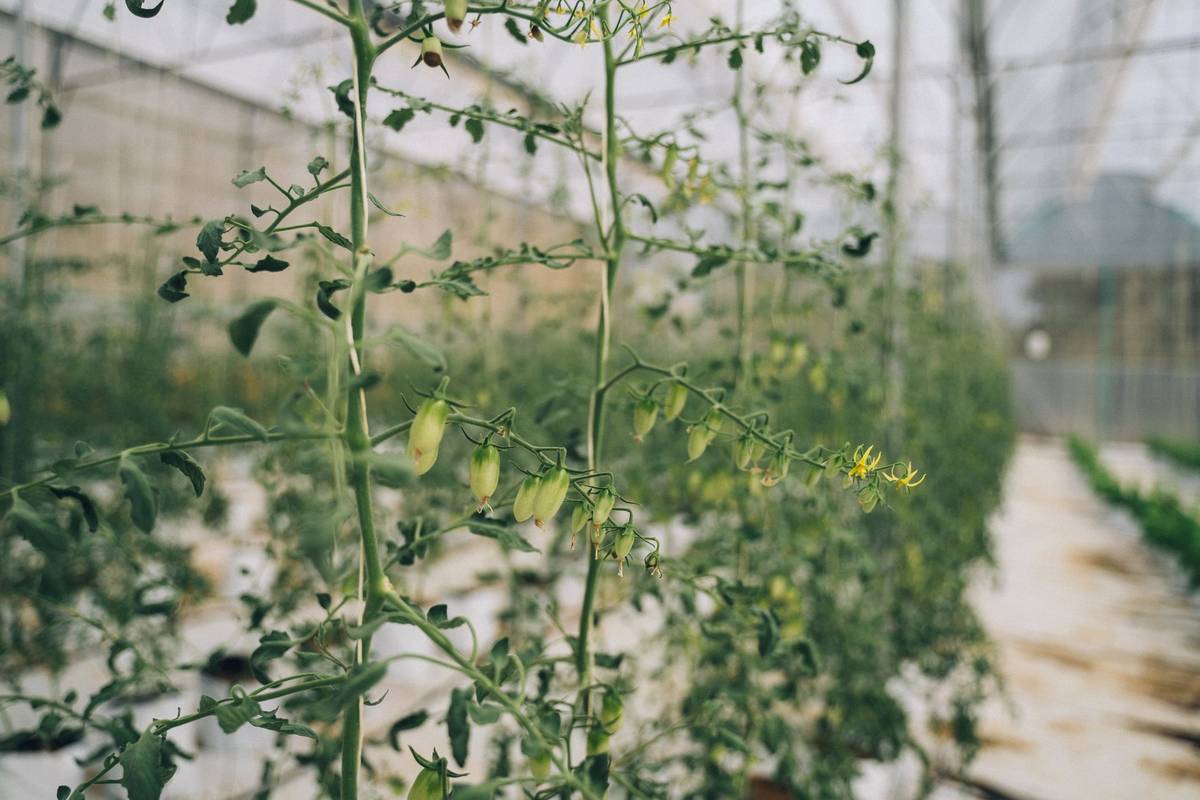
A cheap spray applied to tomato leaves largely undid the damage that salty soil does to the plants. Under the harshest salt conditions in greenhouse trials, treated plants built twice as much shoot mass as untreated ones, and their roots weighed more than 55 percent more. The work was published in the International Journal of Phytoremediation.
Salt is a slow emergency for farming. It affects more than 3.2 million square miles of land worldwide, an area about the size of Australia, and threatens 20 to 30 percent of the world's irrigated cropland, especially in dry regions, according to the research team. Salty ground stops roots taking up water and slows photosynthesis. In high concentrations it poisons the plant outright.
The treatment combines two ingredients. One is manganese oxide nanoparticles, minute particles of a nutrient plants already need. The other is chitosan, a natural polymer taken from crustacean shells, which is available in quantity from seafood waste. The mixture goes on the leaves rather than into the soil, which keeps both the dose and the cost low.
"What makes this approach exciting is that it is low-cost, sustainable and effective at very small doses," said Hamidreza Sharifan, the study's corresponding author and an assistant professor of chemistry at the University of Texas at El Paso. "We are giving plants the tools to protect themselves instead of fighting the salt head-on."
The measured effects went beyond bulk. Carotenoids, pigments the plants use to capture light, rose by roughly 91 percent. The activity of antioxidant enzymes climbed by as much as 300 percent, and chemical markers of cell damage fell sharply. Rather than blocking the salt, the spray appears to strengthen the plant's own stress defences.
Tomatoes were a deliberate test case. Global production reached about 192 million tonnes in 2023, and the crop is comparatively sensitive to salt. "If it works well in tomatoes, that's a strong signal it could be adapted to other salt-sensitive crops," Sharifan told Anthropocene Magazine.
The results come from controlled greenhouse conditions, and the team cautions that field trials are needed before growers can rely on the spray. Two questions stand out for that next stage: whether the effect holds across a full outdoor season, and what repeated applications of manganese do to soil health over years.