Fewer than three percent of Greater Amazonia were surveyed. It was enough to change the arithmetic for the whole region.
Flying long, straight transects over the Brazilian state of Acre, an international team used lidar — laser pulses that slip through gaps in the canopy and map the ground beneath — to scan roughly 4,497 square kilometres of rainforest. The dataset returned 432 earthworks. Only 36 of them had been recorded before. The results appeared on 29 July in the journal Nature.
The builders are known as the Aquiry, and they were not an empire. From about 600 BCE to 850 CE, a network of communities held together by shared traditions cut geometric enclosures into the landscape — circles, squares, octagons, shapes set inside other shapes — outlined by ditches as much as five metres deep and twelve metres wide, with earthen banks raised along the outside. Most enclose around three hectares; the largest known site covers fifty. Straight roads ran between them. There were no metal tools and no draught animals.
A rainforest that people made
Extrapolating from the surveyed strip, the researchers put the Aquiry territory at some 183,000 square kilometres and the number of ceremonial earthworks at more than 20,000, perhaps close to 30,000 — where earlier work had suggested roughly 10,000 for the entire Amazon basin. On that basis they estimate that 1.25 to three million people lived there at the civilisation's height, between 100 and 300 CE, in villages averaging about 300 residents who farmed maize, squash and manioc.
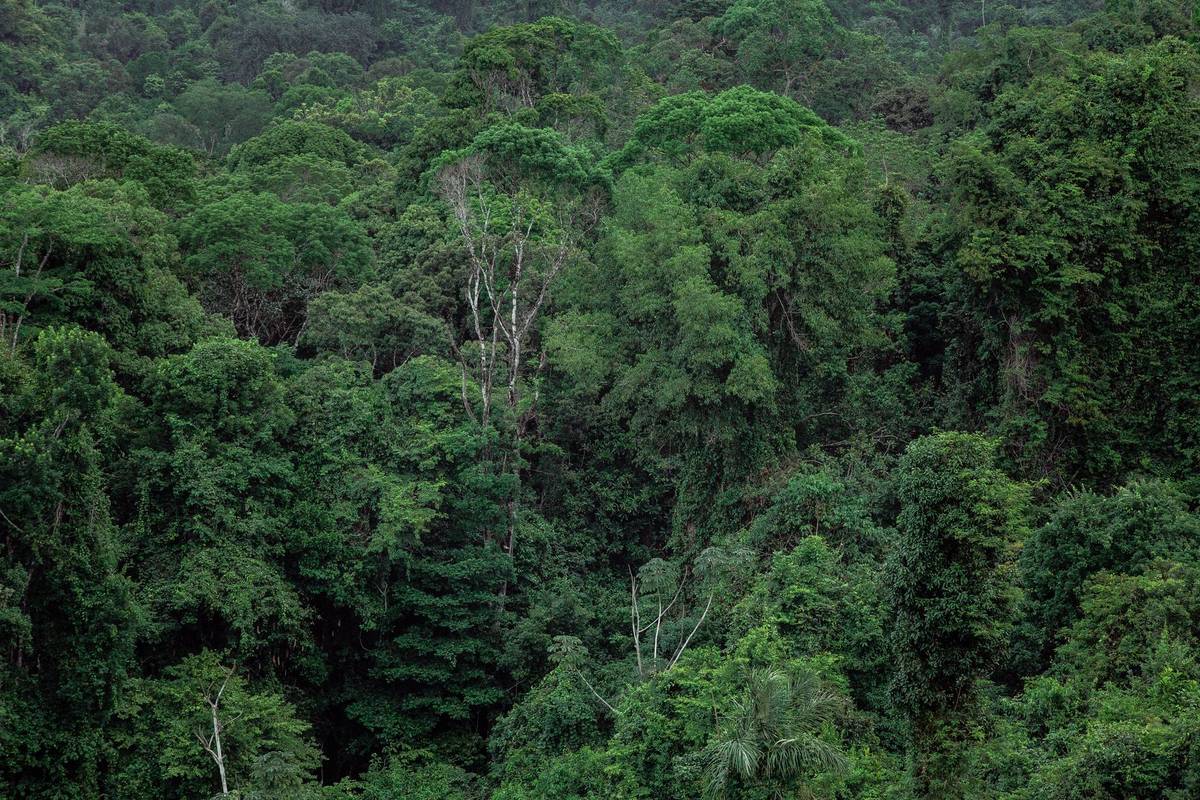
They fed themselves by reshaping the forest, burning bamboo-dominated stands to open fields and clear ground for the ceremonial centres and the wide roads leading to them, tending Brazil nut trees and peach palms, and favouring useful species until the composition of the forest itself shifted. That legacy is still legible in the canopy today.
"Our findings overturn our understanding of the Amazon region's past," said Martti Pärssinen, the University of Helsinki archaeo-anthropologist who led the study, who argues that the effect of such land management on ancient carbon balances belongs in future climate models. What surprised the team most, he told ScienceAlert, was how many earthworks turned up in so small a share of Amazonia — a hint that other regions may have been just as densely settled. His colleague Alceu Ranzi, a geographer at the University of Acre, put it more bluntly: the old picture of a pristine Amazônia does not survive the data.
Michael Heckenberger, an anthropologist at the University of Florida who was not involved in the work, called the new population figures mind-blowing, but also plausible and extremely important.
Why the Aquiry sites were abandoned, between roughly 850 and 950 CE, nobody yet knows. What the survey establishes is narrower and more useful: the forest that conservation policy tends to treat as untouched wilderness is in large part an inheritance.