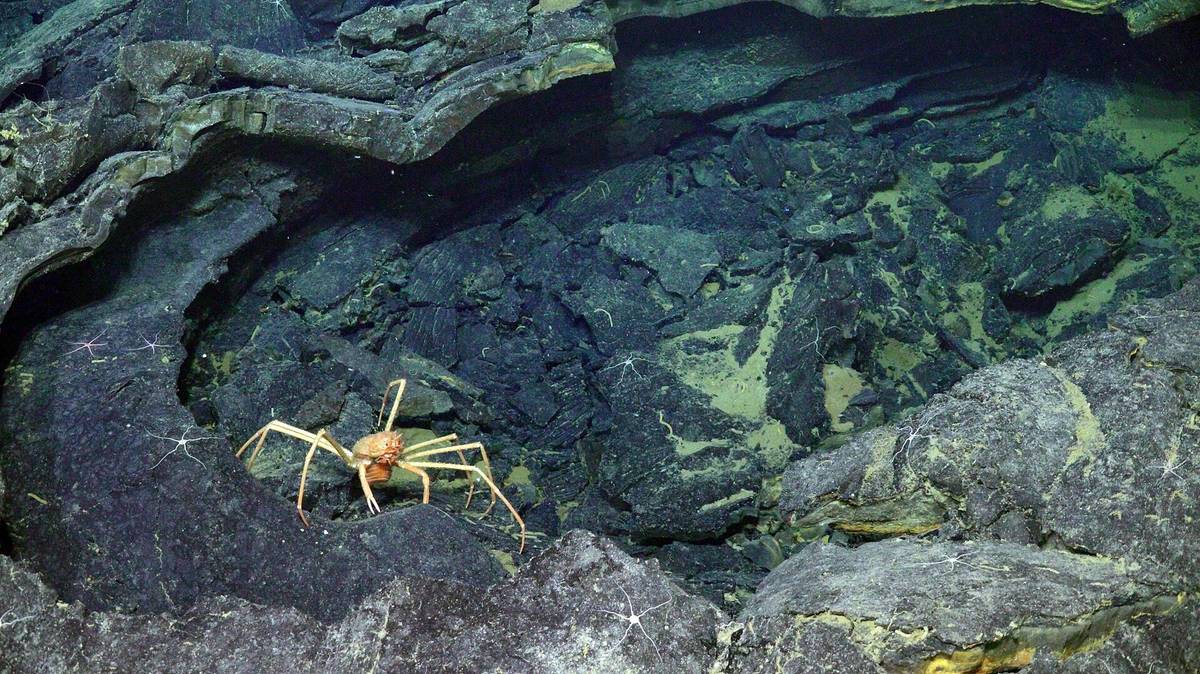
Two-thirds of Earth's surface was manufactured along the mid-ocean ridges, a 65,000-kilometre chain of undersea mountains where tectonic plates draw apart and rising magma cools into fresh crust. Geologists understand this process over millions of years, but they had never watched one of the brief bursts that actually does the building. Until now.
An international team led by the French geophysicist Jean-Yves Royer has captured the first direct, real-time record of a seafloor-spreading event, reported this week in the journal Nature. The key was patience and placement: months earlier, the researchers had anchored an array of instruments across an active section of the Southeast Indian Ridge, the boundary between the Australian and Antarctic plates. Hydrophones, pressure gauges, acoustic transponders and geodetic beacons all stood ready on the seabed.
They did not have to wait long. On 26 April 2024, a swarm of earthquakes signalled magma on the move. Over the following six days, the seabed dropped by about four metres and the plates pulled apart by more than a metre, as a magma reservoir roughly 2.5 kilometres wide and 3.6 kilometres below the crust deflated and fed lava into the rock and onto the seafloor. In all, the event released as much as 160 million cubic metres of lava, the volume of more than 60 Great Pyramids of Giza. In a single episode, the ridge absorbed close to 40 years' worth of the plates' otherwise fingernail-slow separation.
"We were expecting to measure a few centimetres," Royer said; instead the ground moved on the scale of metres.
A quiet kind of spreading
The most striking finding was how little of this upheaval registered as earthquakes. The main fault slipped by roughly two metres, yet quakes accounted for only 10 to 20 centimetres of that movement. The rest happened silently, after the rock had already fractured, in a slow aseismic slip closely tied to the advancing magma.
That helps resolve a long-standing puzzle: why mid-ocean ridges shake far less than their rapid growth would suggest. Much of the motion, it appears, is simply too quiet to detect. The team now hopes to study other ridges, including those driven more by earthquakes than by magma, to see how widely the pattern holds.