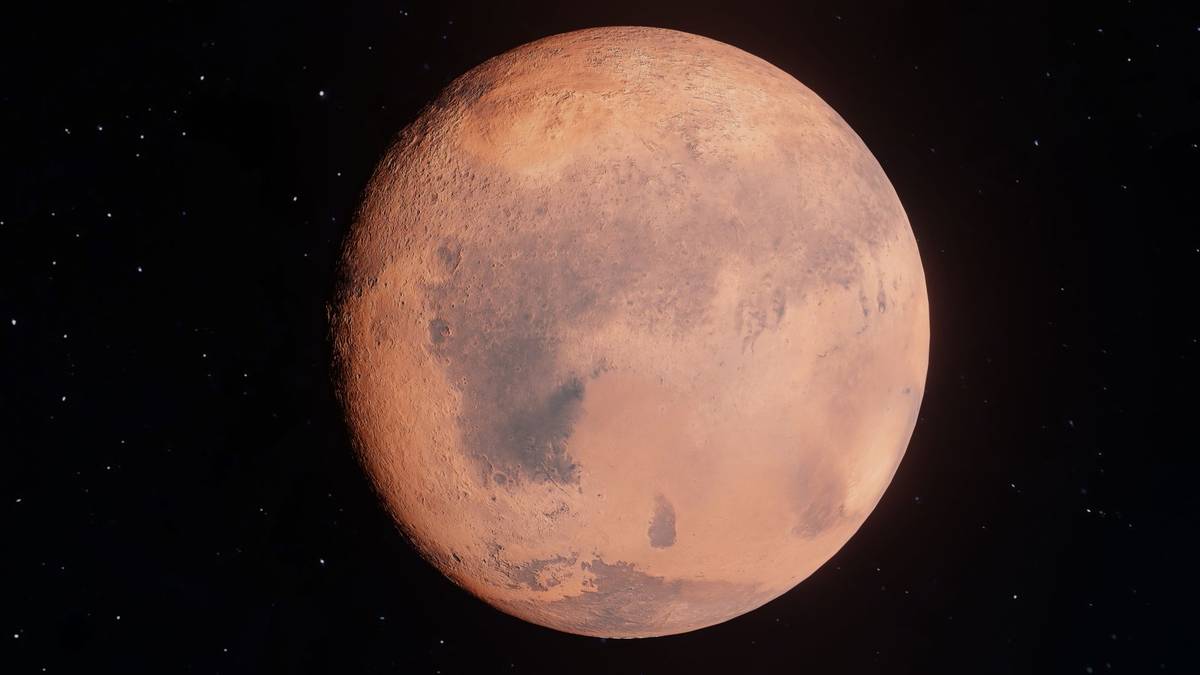
A NASA spacecraft has borrowed a little of Mars's momentum to fling itself deeper into the solar system – and sent back a time-lapse of the Red Planet swelling and shrinking as it passed.
The Psyche mission swept by Mars on 15 May, coming within about 4,609 kilometres (2,864 miles) of the surface. The manoeuvre, known as a gravity assist, let the planet's pull hand the spacecraft a speed boost of roughly 1,000 miles per hour and nudge its orbital plane by about one degree – all without burning a drop of propellant. That free push set Psyche on course for its true destination: a metal-rich asteroid, also named Psyche, that it is due to reach in the summer of 2029.
A planet in motion
NASA released the imagery on 17 July. Stitched from thousands of frames captured between 2 and 31 May, the time-lapse begins with Mars as a slim crescent in the distance. As the spacecraft closes in, the planet grows until its cratered surface fills the camera's view; on the way out, the shifting angle reveals the bright cap of ice at the Martian south pole. Along the way the imaging team picked out wind-scoured craters and the large double-ringed basin known as Huygens crater.
The flyby was more than a photo opportunity. Gravity assists are a standard tool of deep-space travel precisely because they save fuel that a spacecraft would otherwise have to carry from launch – mass that translates directly into cost and complexity. By letting Mars do the work, mission planners conserved Psyche's own propulsion for the long cruise ahead and the delicate business of settling into orbit around the asteroid.
That asteroid is the reason for the whole journey. Rich in metal, Psyche may be the exposed core of an early planetary building block – a chance to study, from the outside, the kind of interior that Earth keeps locked thousands of kilometres beneath its crust. The Mars encounter, and the striking pictures it produced, were simply a well-aimed step on the way there.