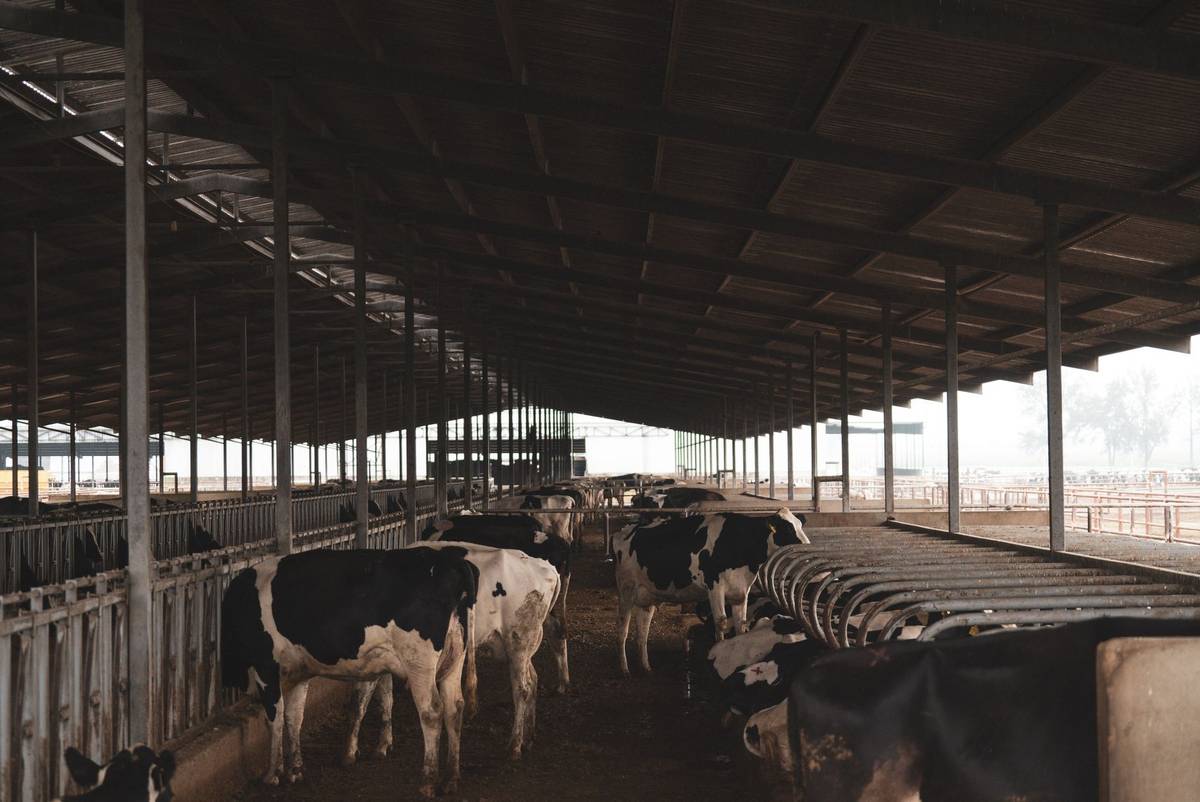
That children who grow up on farms suffer less often from asthma, hay fever and eczema has been documented for decades. Why remained a well-founded guess: observational studies could show correlations, but not causes. An international team led by Markus Ege of the Dr. von Hauner Children's Hospital at LMU University Hospital and the Institute of Asthma and Allergy Prevention at Helmholtz Munich has now closed that gap – naming the entire chain of action, from the digestive tract of a cow to two docking points in children's airways.
The work, published in NEJM Evidence, rests on samples from more than a thousand children in European studies in rural areas: nasal swabs and mattress dust, plus cowshed dust for 47 farm children. Using analyses of ribosomal RNA, the team determined which bacteria and fungi were present, which metabolic products they generate and how the immune system might respond. Computer models narrowed the candidates down step by step; data from France and Finland served as a cross-check. Whether the children's own genes shape the protection was examined as well.
What remained was a surprisingly small group: nine Gram-positive bacterial species, among them Romboutsia timonensis and Glutamicibacter arilaitensis. All originate in the digestive tract of cows, where they break down components of feed. Together, according to first author Giulia Pagani, they account for two-thirds of the entire farm effect against asthma and half of the protection against hay fever and atopic eczema. Gram-negative bacteria or fungal spores from the same barn air showed no measurable effect.
From the cowshed to the receptor
Four metabolic products of these bacteria are decisive: kynurenine, xanthine, alpha-linolenic acid and stearidonic acid. They enter the barn air, are inhaled and bind to two receptors on the mucous membrane cells of the airways, AhR and PPARγ. Both act as the body's own environmental sensors and govern how forcefully the immune defence reacts to a stimulus. In the team's assessment, they prevent precisely the excessive inflammatory response that characterises asthma and allergies. Their role in the farm effect was previously unknown.
The hygiene hypothesis, first proposed in 1989, is thus no longer merely plausible but evidenced link by link: cow, barn air, bacterium, metabolite, receptor, protection. The practical significance lies above all at the end of that chain. Knowing which molecules act on which receptors makes it possible to search deliberately for drugs that imitate the effect. Prevention of asthma, hay fever and eczema would then no longer be a privilege of children raised next to a cowshed.