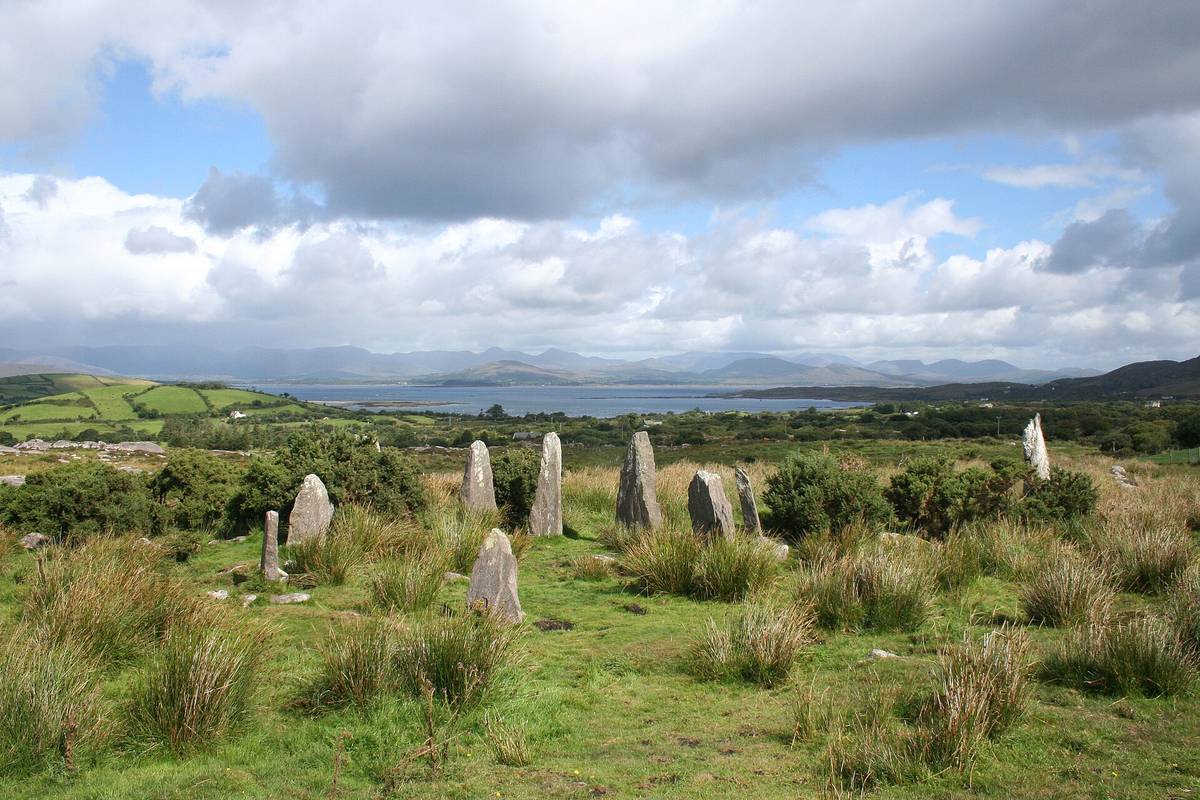
Archaeologists have long puzzled over why the great collective stone tombs of Neolithic Europe, the megaliths built across northwestern Europe until roughly 5,000 years ago, stopped being raised. A new genetic study of a single tomb north of Paris now offers one of the clearest answers yet.
Researchers led by the University of Copenhagen sequenced the genomes of 132 people buried in the allée sépulcrale at Bury, about 50 kilometres north of Paris, and published their results in Nature Ecology & Evolution. The tomb, they found, was used in two distinct phases separated by centuries of silence: an earlier one ending around 3000 BC, and a later one beginning around 2900 BC.
The DNA showed that the two groups were essentially unrelated. "We see a clear genetic break between the two periods," said Frederik Valeur Seersholm, one of the study's lead authors. The earlier community resembled Stone Age farmers from northern France and Germany; the later arrivals carried ancestry linked to southern France and the Iberian Peninsula, suggesting people migrated north into the emptied Paris Basin.
A crisis written in bones and bacteria
The skeletons from the earlier phase told a troubling story. Mortality was unusually high, especially among children and young people. "The demographic pattern is a strong indicator of crisis," said Laure Salanova of France's National Centre for Scientific Research (CNRS).
Analysing all the genetic material preserved in the bones, the team also detected pathogens, including Yersinia pestis, the plague bacterium, and Borrelia recurrentis, which causes louse-borne relapsing fever. Yet plague alone does not explain the collapse. "The decline was likely driven by a combination of disease, environmental stress and other disruptive events," said senior author Martin Sikora. Pollen records pointing to forest regrowth between the two phases hint at abandoned fields and a thinning population.
The genes also traced a social transformation. In the earlier period, the tomb held multiple generations of extended families. Afterwards, burials became more selective and were dominated by a single male lineage; for the newcomers, shared culture and status appear to have mattered as much as blood.
Together, these strands suggest that Europe's megalith builders did not simply change their customs. In this corner of France, the population that raised the monuments largely disappeared. "We now see that end of these monumental constructions coincides with the disappearance of the population that built them," Seersholm said, a reminder of how much ancient DNA can now recover from a long-quiet grave.