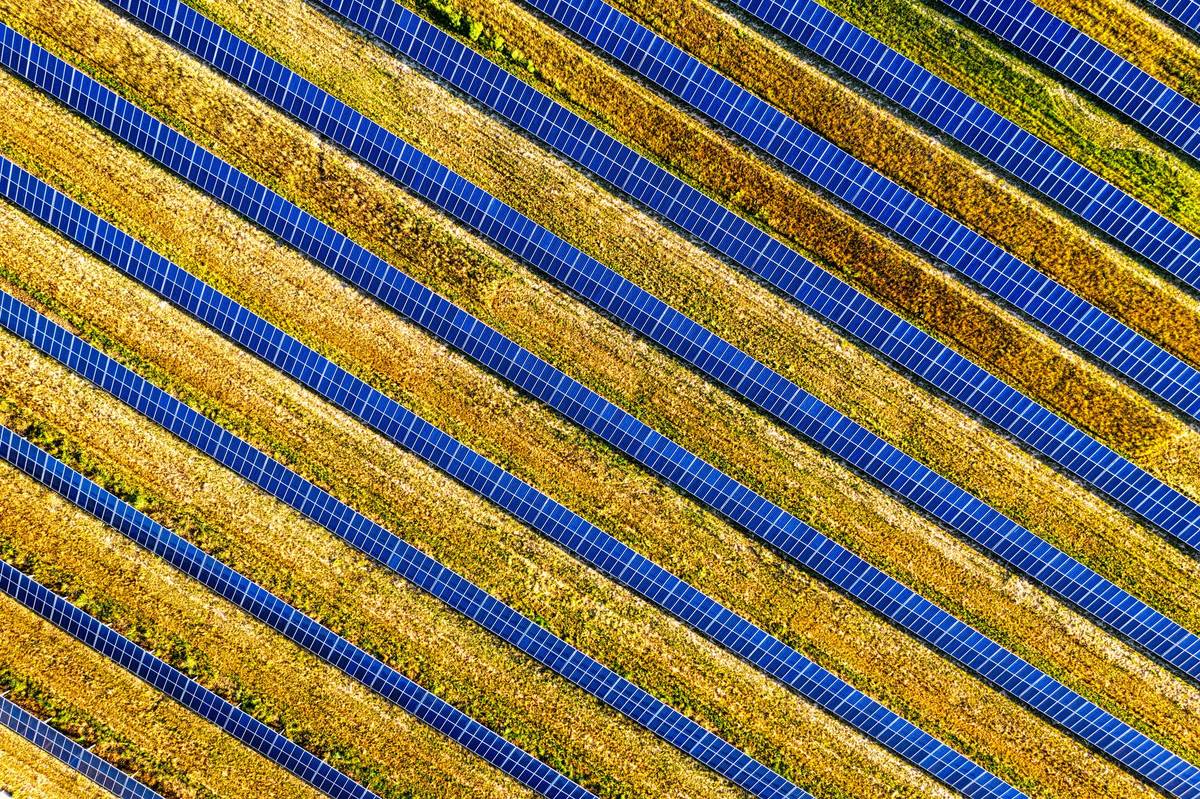
For the first time ever, a quarter of the EU's electricity came from photovoltaics in June. According to analysis by the energy think tank Ember, solar installations delivered 52 terawatt hours, or 25 per cent of the bloc's monthly generation — a record that beats the previous high of 47 terawatt hours (23 per cent) set in May this year.
That made the sun the union's largest single power source for the month: ahead of nuclear (21 per cent), gas (15 per cent), wind (14 per cent) and hydro (12 per cent). Coal managed just eight per cent. It was only the third month in which solar has ever led the mix — after June 2025 and May 2026.
More striking than the record is the pace behind it. In June 2021 photovoltaics covered ten per cent of EU power, 21 terawatt hours in absolute terms. Between 2021 and 2025 solar generation grew by more than a fifth every year, faster than any other source on the grid. Installation is what carries it: 65.1 gigawatts of new capacity were added in 2025 alone.
Solar's rise has been truly stratospheric, beating prediction after prediction, says Chris Rosslowe, senior analyst at Ember. Within a few years, he says, solar has gone from a small player to an essential part of Europe's power system, as governments and citizens reach for low-cost, quick-to-install domestic generation.
Eighteen countries with new highs
This is not an effect confined to sun-drenched member states. So far this year, 18 of the 27 EU countries have set new monthly records for the share of power from solar. Spain passed a third for the first time in June (34 per cent). Germany, which has more installed photovoltaic capacity than any other European country, reached 33 per cent in May and 36 per cent in June. Even Poland, one of the EU's biggest coal burners, hit 24 per cent — after adding more than 20 gigawatts between 2020 and 2025.
The record coincided with high summer demand, driven partly by the need for cooling during heatwaves. Just as other sources faltered in hot, still conditions, photovoltaics held supply up — precisely when the grid needed it most.
For consumers the effect is measurable. Spain has doubled its wind and solar capacity since 2019, adding over 40 gigawatts, more than any EU country except Germany, whose power market is twice the size. Spanish bills have fallen while many others rose; Ember puts the relief at around ten euros per household per month. Rosslowe draws a broader conclusion: you do not need Spanish sunshine to achieve what Spain has achieved — every country in Europe could make better use of its own wind and solar resources and cut its reliance on expensive gas.