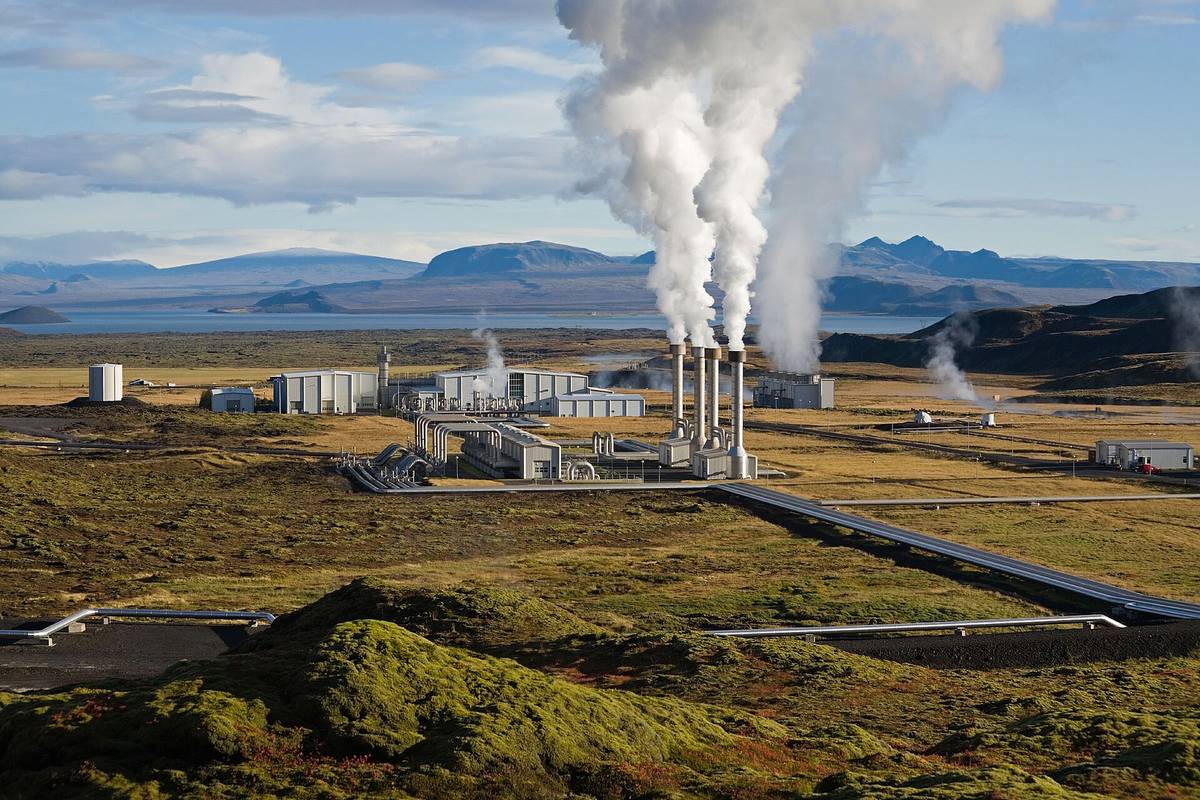
Quaise Energy, a company spun out of the Massachusetts Institute of Technology, has raised $134 million in the first close of a Series B round, money it intends to use to build what it calls the world's first commercial superhot geothermal power plant.
The round was led by Prelude Ventures and drew strategic backing from JERA and Idemitsu, two of Japan's largest energy firms, alongside existing investor Safar Partners. Quaise said further equity and debt financing is expected to close shortly. Counting earlier rounds, the company has now raised roughly $230 million.
At the heart of the effort is an unusual way of drilling. Conventional rigs rely on rotating bits that wear out quickly in hard, hot rock, which is why most geothermal wells stay comparatively shallow. Quaise instead directs high-power millimeter waves down the borehole, energy that heats the rock until it vaporises. Because nothing physically touches the rock face, the method - refined over more than a decade of research at MIT - is meant to keep advancing into formations that would grind ordinary equipment to a halt.
The prize is heat. Quaise says its approach could reach rock between roughly 300 and 500 degrees Celsius in most parts of the world. Deeper, hotter rock yields far more energy per well, which in principle means fewer holes and a power density closer to that of fossil-fuel or nuclear plants, but without the emissions.
From a Texas test hole to an Oregon plant
The technology is still being proven in the field. At a test site in central Texas, Quaise has drilled through more than 100 metres of granite and is now nearing one kilometre of depth - which the company says would be the deepest hole ever bored by a non-contact system. To tap the hottest rock at its commercial site, it must ultimately drill past five kilometres.
That commercial site is Project Obsidian, planned on federal geothermal leases in Oregon's Deschutes National Forest. Quaise aims to deliver first electricity to the grid by 2030, starting above 50 megawatts and scaling toward 250, and has already signed an unnamed data-centre operator for the initial output.
"This round takes us from field-proven technology to first commercial revenues," said chief executive Carlos Araque. The interest reflects a broader revival of geothermal as demand grows for reliable, round-the-clock clean power.