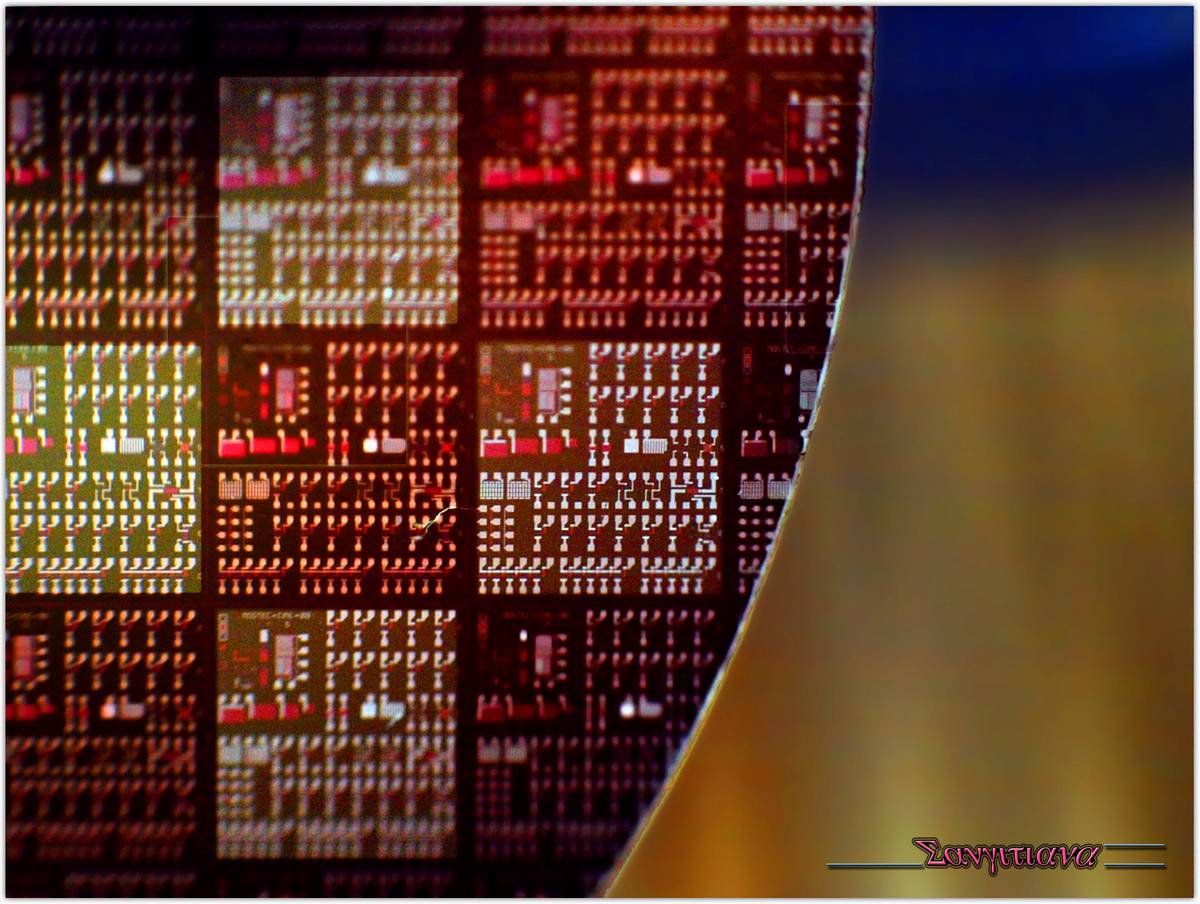
Europe's first TSMC plant in Dresden is still under construction — yet Infineon is already looking further ahead. At the Bavarian Semiconductor Congress in Munich, chief operations officer Alexander Gorski floated the idea of a second factory: "The next step has to be for TSMC to build another factory with small structure sizes."
The existing project operates as ESMC (European Semiconductor Manufacturing Company), a joint venture between TSMC and Bosch, Infineon and NXP, which hold small stakes. The plant costs around ten billion euros. From next year it is to produce chips with mature structure widths of 28 to 22 and later 16 to 12 nanometres — components mainly demanded by the automotive industry. Thanks to integrated non-volatile memory such as RRAM and MRAM, Dresden is set to become the world's most advanced factory for microcontrollers.
Modern chips for artificial intelligence, by contrast, are made with three- to five-nanometre technology, and server processors now reach two nanometres. Europe so far lacks the capacity for such cutting-edge manufacturing: below the seven-nanometre node, the only player currently addressing the market is Intel in Ireland — and for now only for its own chips. A second plant with finer structures would need expensive EUV scanners and would push costs noticeably higher.
Japan as a template
Japan shows that such a model can work. The Dresden ESMC plant is modelled in large part on Japan's JASM joint venture, in which Sony, Denso and Toyota hold minority stakes. Out of this first attempt by TSMC to engage with local partners quickly came the order for a second factory — which this February was even upgraded to modern three-nanometre production. TSMC thinks in expansion phases anyway: from the second phase on, a site pays off considerably better, and new factories are designed for at least four phases.
Demand remains decisive. TSMC's Europe chief Paul de Bot stressed as early as last autumn that a market for such chips must exist first, and that production would then follow. Cutting-edge manufacturing does not yet play a central role for large parts of European industry — but that could change in the coming years. If the partners begin talks soon, a second plant would go into operation in 2030 at the earliest. With his proposal, Infineon is thus setting the course early for the next decade of European chip production.