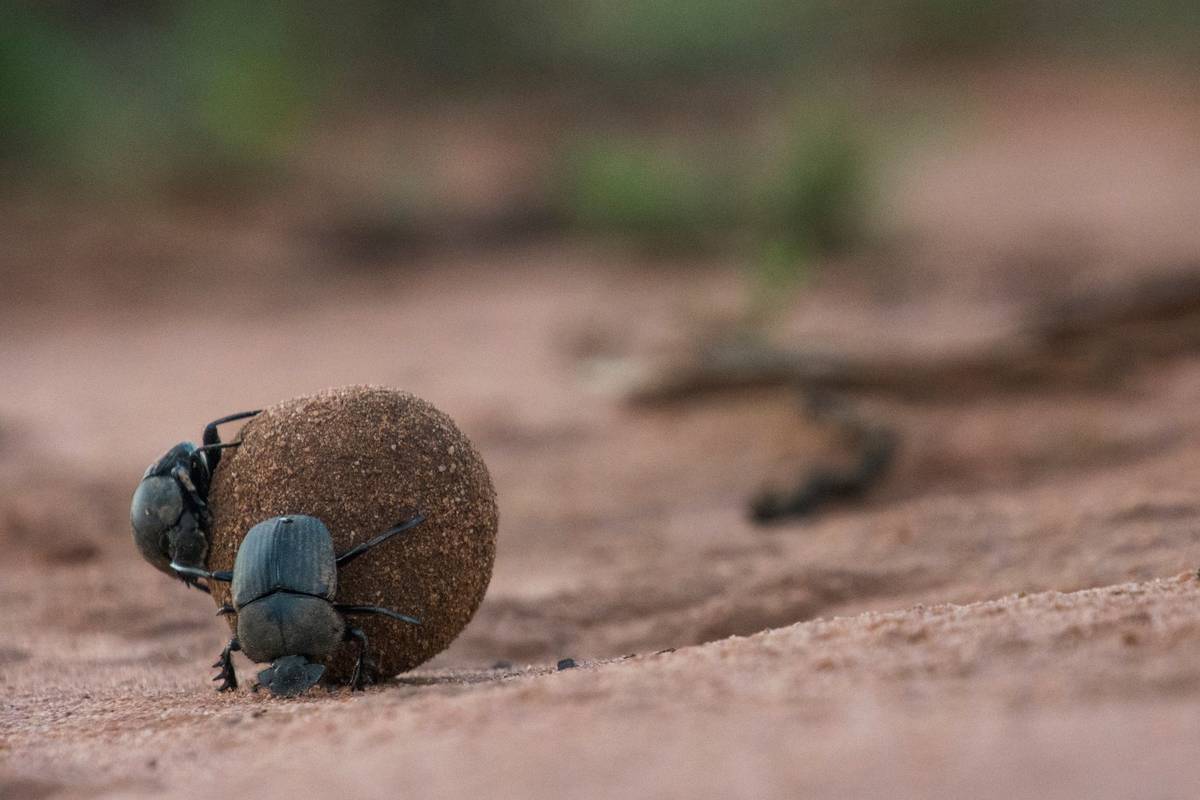
Some climate solutions arrive in a lab; this one arrives in a cow pat. Researchers at Southern Cross University and the University of New England have found that dung beetles slash methane emissions from cattle manure by up to 85 percent, in what they say is the first Australian study to put a hard number on the insects' effect on greenhouse gases.
The work, published in the journal Ecological Entomology, tracked emissions from cattle dung over 90 days using sealed gas-analysis chambers in northern New South Wales. The team compared pats colonised by a mix of four introduced beetle species with beetle-free controls. Left alone, the control pats released bursts of methane around days six and sixteen; the beetle-worked pats stayed near zero for the entire experiment. Overall, the beetles cut the manure's total greenhouse-gas footprint by 18 percent.
The mechanism is physical. "By tunnelling and aerating the dung, these beetles effectively repurpose greenhouse gases for low-emission decomposition," said Nigel Andrew, a professor at Southern Cross University. Methane is produced by microbes that thrive in the airless interior of a dung pat; as beetles burrow, they break up those oxygen-starved pockets and tip decomposition toward aerobic pathways, converting potent methane into far less warming carbon dioxide. The beetles also sped up the early release of that lower-impact CO2.
Strikingly, the benefit outlasted the insects. Most beetles had left the pats by day 23, yet the climate-friendly signature persisted — evidence that their tunnelling reshapes the dung's microbial community for the long term.
A living tool for lower-emission grazing
Livestock farming is among the largest sources of agricultural methane, and options to curb it without shrinking herds are scarce. Australia offers a ready workforce: alongside more than 500 native species adapted to marsupial droppings, the national science agency CSIRO introduced over 20 beetle species from Africa, Hawaii and southern Europe between 1968 and 1992 to improve pastures and control flies. The new findings suggest those same insects quietly deliver a climate dividend.
The researchers frame beetle-friendly grazing as a low-cost lever that could feed into future farm carbon accounting — a reminder that some of the most effective interventions are already at work underfoot, asking only that we let them do their job.