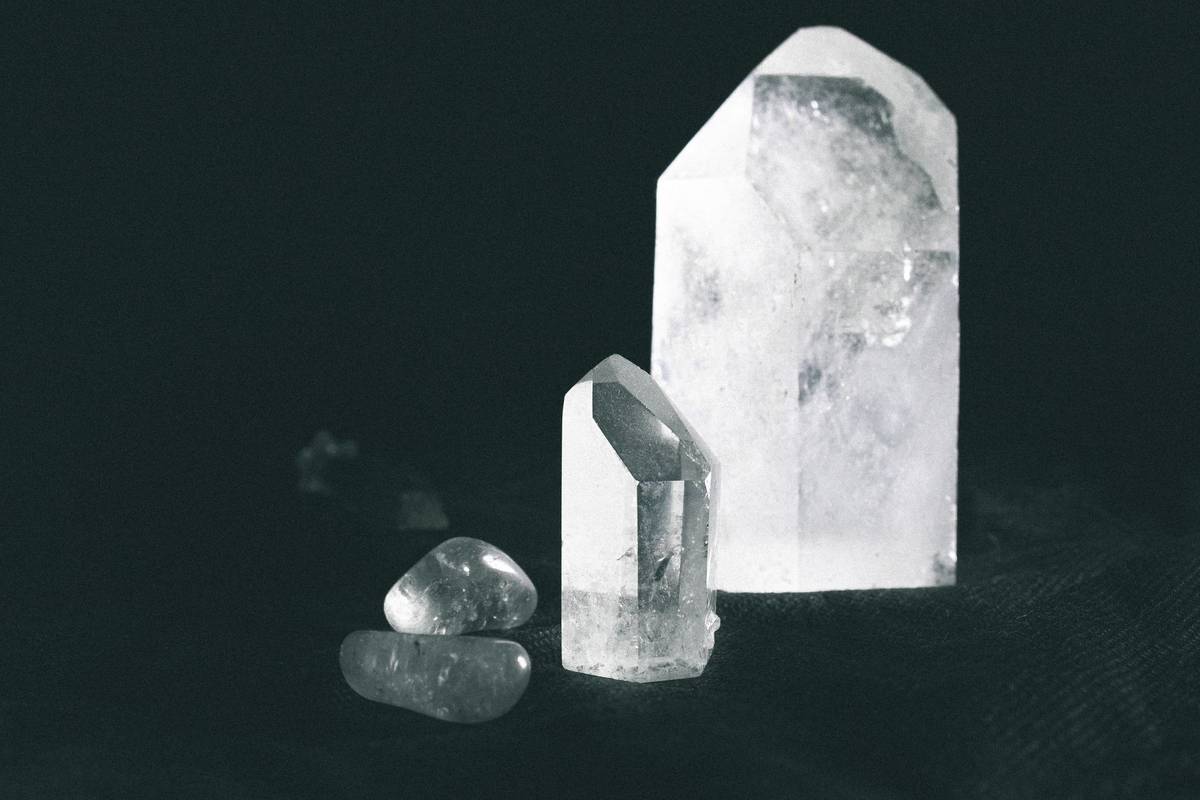
Long before crystals lined jewelry counters and windowsills, our distant ancestors were already gathering them. Archaeologists have found quartz and calcite stones at sites once inhabited by early members of the human family — carried home and kept as far back as 780,000 years ago, even though they served no obvious purpose as tools, weapons or ornaments. Why has puzzled researchers for decades.
A study in the journal Frontiers in Psychology offers an unexpected witness: the chimpanzee. Working at the Rainfer primate rescue center in Spain, a team led by crystallographer Juan Manuel García-Ruiz of the Donostia International Physics Center tested how two groups of chimps — animals raised in close contact with humans — responded to crystals.
The results were striking. In one experiment, the researchers set a roughly foot-tall quartz crystal on a pedestal beside a similar-sized lump of dull sandstone. Both caught the apes' eye at first, but within moments the plain rock was forgotten. The chimps seized the crystal, turned it over, tilted it, and held it up to peer through its transparent faces.
An object worth bargaining for
How much the animals valued their find became clear when it was time to return it. Members of both groups carried the crystal into their hay-lined sleeping quarters, and with one group the researchers ended up trading bananas and yogurt to coax the shiny stone back out — a strong hint that the chimps prized it. Across the trials, two features seemed to draw them in: transparency and geometric shape.
Humans and chimpanzees last shared a common ancestor between six and eight million years ago, yet still carry many traits in common. That the two species are drawn to the same shimmering stones suggests the fascination reaches far deeper in time than modern culture. "We now know that we've had crystals in our minds for at least six million years," García-Ruiz said.
Why it matters: the finding will not settle every question about early human behavior, and enculturated chimps are not wild ones. But it reframes a quiet mystery — our species' long love affair with sparkling stones may be less a cultural invention than an inheritance, written into us long before we were human.