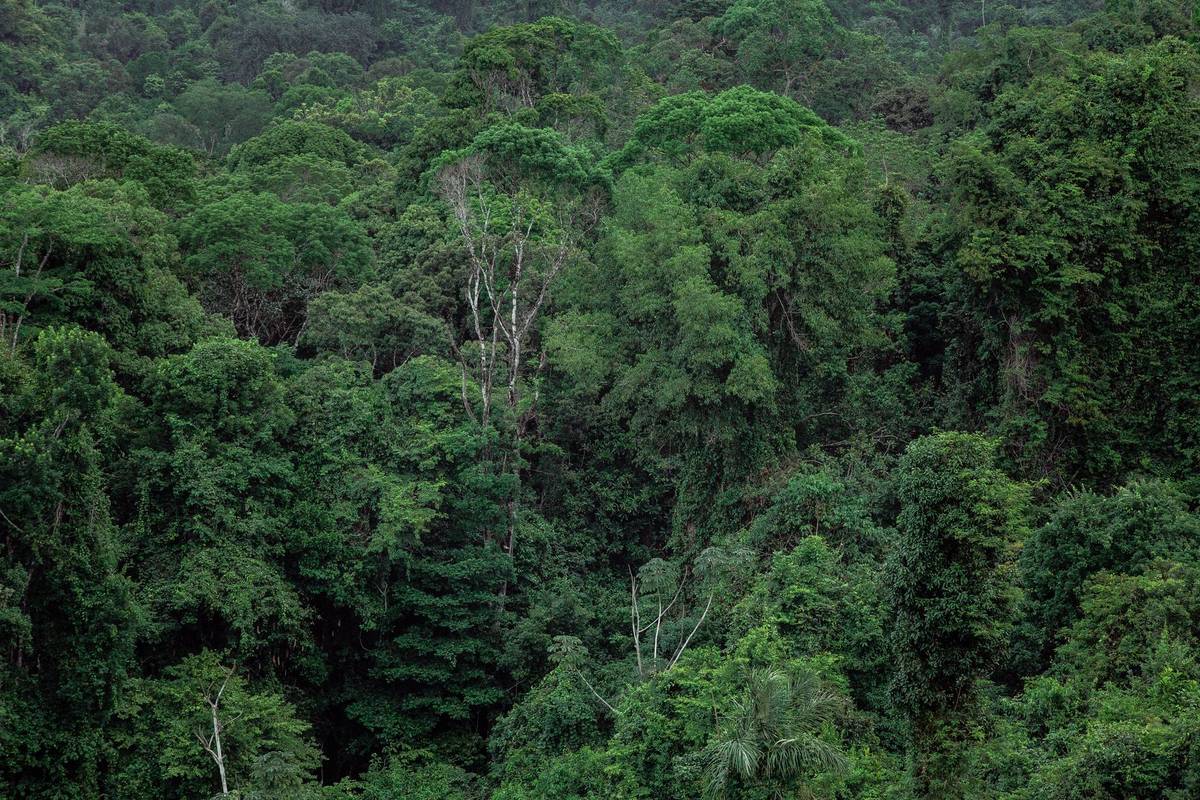
The pace of destruction in the world's largest rainforest is easing. Satellite monitoring by Brazil's National Institute for Space Research (INPE) recorded 1,295 square kilometres (500 square miles) of clearance in the Brazilian Amazon between January and June 2026 — a 38 percent fall from the 2,090 square kilometres lost in the same months of 2025, and the lowest first-half figure in a decade.
The numbers matter less as a statistic than as a demonstration. "This is evidence that deforestation is not an inevitable process," said Ane Alencar, science director at the Amazon Environmental Research Institute, arguing that the decline shows forest loss "is responsive to decisions made by society and the government." For a biome long described as sliding toward an irreversible tipping point, that is a pointed claim: the trend can bend the other way.
The improvement sits within a longer arc. Clearance in the Brazilian Amazon peaked around 2022, when an area many times the size of a major city was stripped in a single year. It roughly halved the following year and has continued to slide since, as monitoring and enforcement tightened. The biodiverse Cerrado savanna to the south followed the same direction in early 2026, with about 3,142 square kilometres cleared — its lowest first-half total since 2021.
Researchers were quick to temper the optimism. A slowing rate is not the same as a protected forest, Alencar cautioned, and the pressures have not disappeared: illegal gold mining eats into remote areas, and fire remains a dominant driver of damage — in 2024 it accounted for an estimated 60 percent of primary-forest loss, much of it set to clear land. A single drought year can undo a season's progress in weeks.
Why the trend is fragile
The data covers only the calendar half-year, and the dry season, when burning intensifies, still lies ahead. Brazil has reaffirmed a pledge to end illegal deforestation by 2030, a target that will require the current trajectory to hold through hotter, drier months and across a territory larger than most countries.
Still, the direction of travel is unambiguous, and it is the right one. After years in which the Amazon's story was told almost entirely in losses, the first half of 2026 offers a rare and measurable gain — proof that policy, monitoring and political choice can move the needle on one of the planet's most important carbon stores.