For decades, chemists puzzled over an awkward gap in the story of life's origins: sugars are essential to biology, forming the backbone of DNA and RNA, yet they are stubbornly hard to make under the conditions thought to have existed on the early Earth. A new detection deep in our galaxy offers a striking hint that some of that chemistry may not have needed Earth at all.
An international team led by Izaskun Jiménez-Serra of Spain's Center for Astrobiology has identified erythrulose — a genuine sugar — floating in interstellar space for the first time. The molecule turned up in G+0.693−0.027, a cold, molecule-rich cloud near the centre of the Milky Way that astronomers regard as one of the galaxy's richest chemical storehouses. Erythrulose is a four-carbon sugar, more complex than any previously confirmed between the stars, and familiar on Earth as a compound found in raspberries.
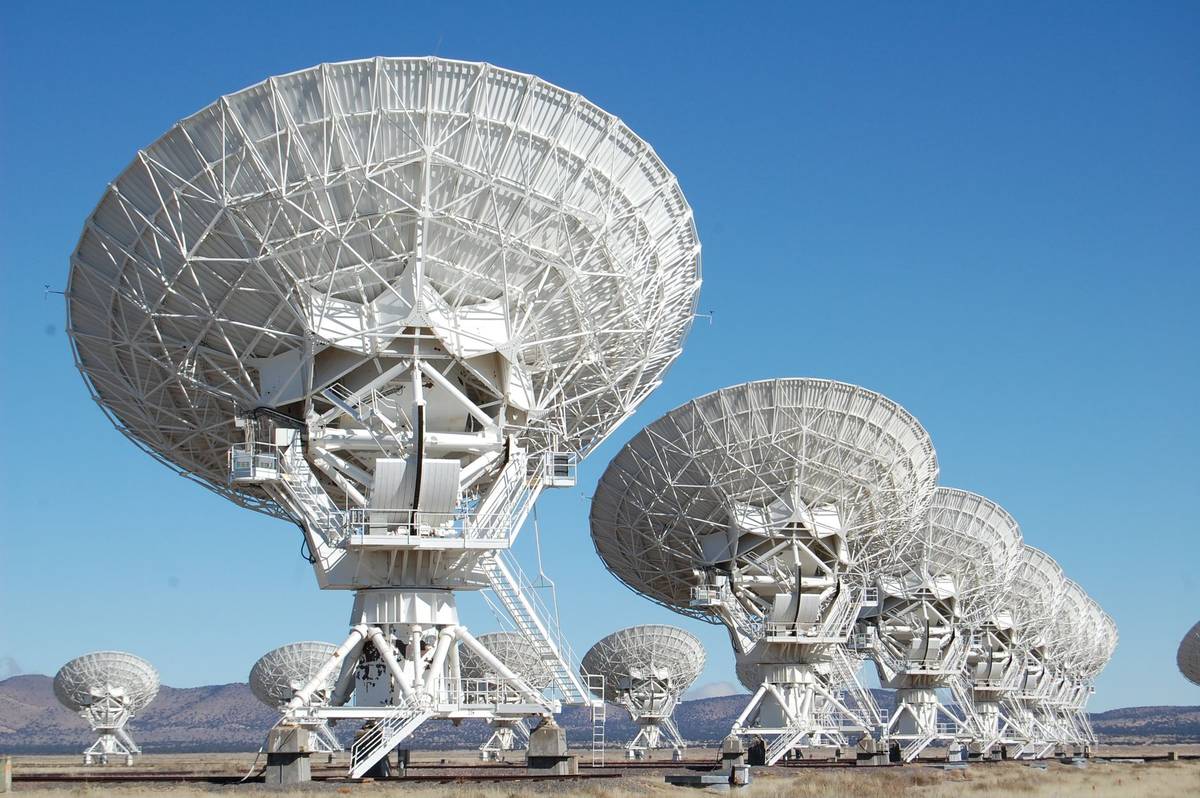
To find it, the researchers pointed two radio telescopes — the 40-metre dish at Yebes in Spain and the 30-metre IRAM telescope — at the cloud and combed the resulting spectra for the molecule's fingerprint. They matched a dozen spectral lines against erythrulose measured in the laboratory, and found the sugar to be at least eight times more abundant than related three-carbon sugars, none of which showed up at all.
That result is itself a surprise. Astrochemists had generally assumed molecules in space grow steadily, one carbon atom at a time; finding a larger sugar without its smaller cousins points to a different chemical route — most likely reactions on the icy surfaces of dust grains, long before any planet forms.
The discovery does not mean life exists out there. But it reinforces a compelling idea: the building blocks for biology can assemble in deep space, ride aboard comets and asteroids, and be delivered to young worlds. Sugars have already been found in meteorites and in samples returned from the asteroid Bennu; catching one adrift between the stars pushes their possible origin further back still. The work, published in Nature Astronomy, marks the first time researchers have detected a sugar beyond our own solar system — a result so unexpected that colleagues elsewhere were sharing it within days of first seeing the data.