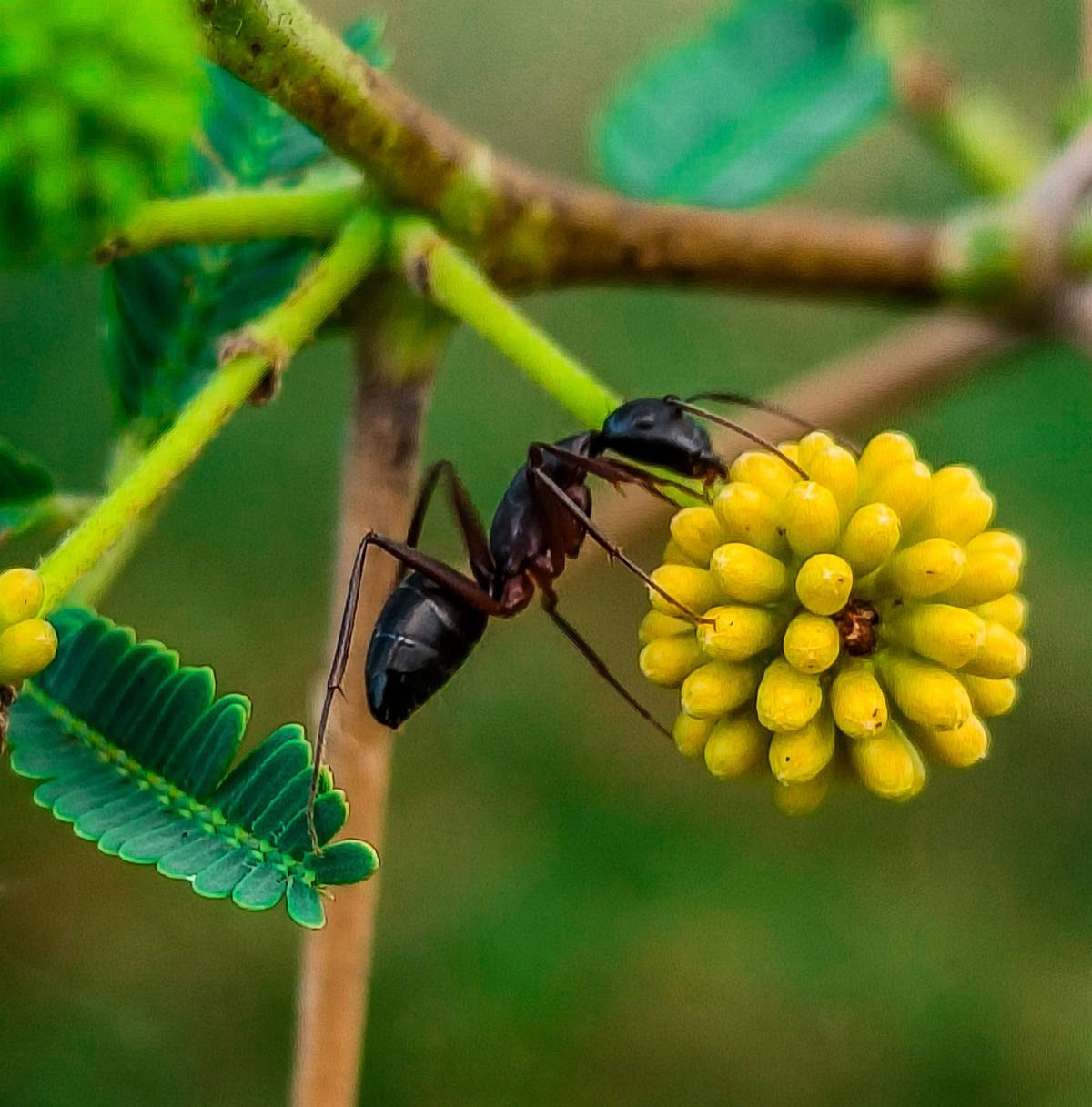
For much of evolutionary history, animals laid their eggs and moved on. Researchers at Rockefeller University have now traced one route by which that indifference gave way to care — and it runs, unexpectedly, through the biology of hunger.
Working with the clonal raider ant (Ooceraea biroi), whose colony members are genetically identical, the team examined how a single insect divides its life between two jobs: tending the brood when young and foraging when older. In the colony, young ants (about 12 days old) spend more than twice as long nursing larvae as their older nestmates (around four months), which in turn spend far more of their time searching for food.
To find the molecular switches behind that shift, the scientists first catalogued the ant's full set of neuropeptides — short signaling molecules in the brain — identifying 70 of them. They synthesized many and tested them one by one in a purpose-built assay that paired a lone ant with a single larva and automatically tracked their contact. Two candidates stood out, and they pull in opposite directions: neuropeptide F (NPF) increased brood care, while allatostatin A (AstA) pushed ants away from the larvae and toward foraging.
The two peptides also track the animal's age. Young, nurturing ants carried more NPF and less AstA in key brain regions; older, foraging ants showed the reverse. Raising or lowering either molecule shifted behavior accordingly, confirming that they help drive the lifelong handover of duties.
An old circuit put to new use
NPF and AstA are not novelties. Both are ancient regulators of feeding, conserved across solitary animals, and in the ants they remained tied to nutrition: starved ants produced more NPF and less AstA and behaved like caregivers, while well-fed ants tipped the other way and drifted toward foraging.
"Our work is a prime example of how evolution seldom invents things from scratch," said Daniel Kronauer, who leads the Laboratory of Social Evolution and Behavior at Rockefeller. "Parental behavior is a lot about feeding — not just yourself, but your offspring."
Because mammals rely on related signaling molecules for caregiving, the findings hint at a shared blueprint for how parenting arose repeatedly across the animal kingdom. Susanne Foitzik, a researcher at Johannes Gutenberg University Mainz who was not involved in the study, noted that the peptides' opposing roles give colonies a flexible lever over behavior. With roughly 60,000 brain cells — against about 100 million in a mouse — the ant may also offer a tractable window onto how healthy aging reshapes the brain.