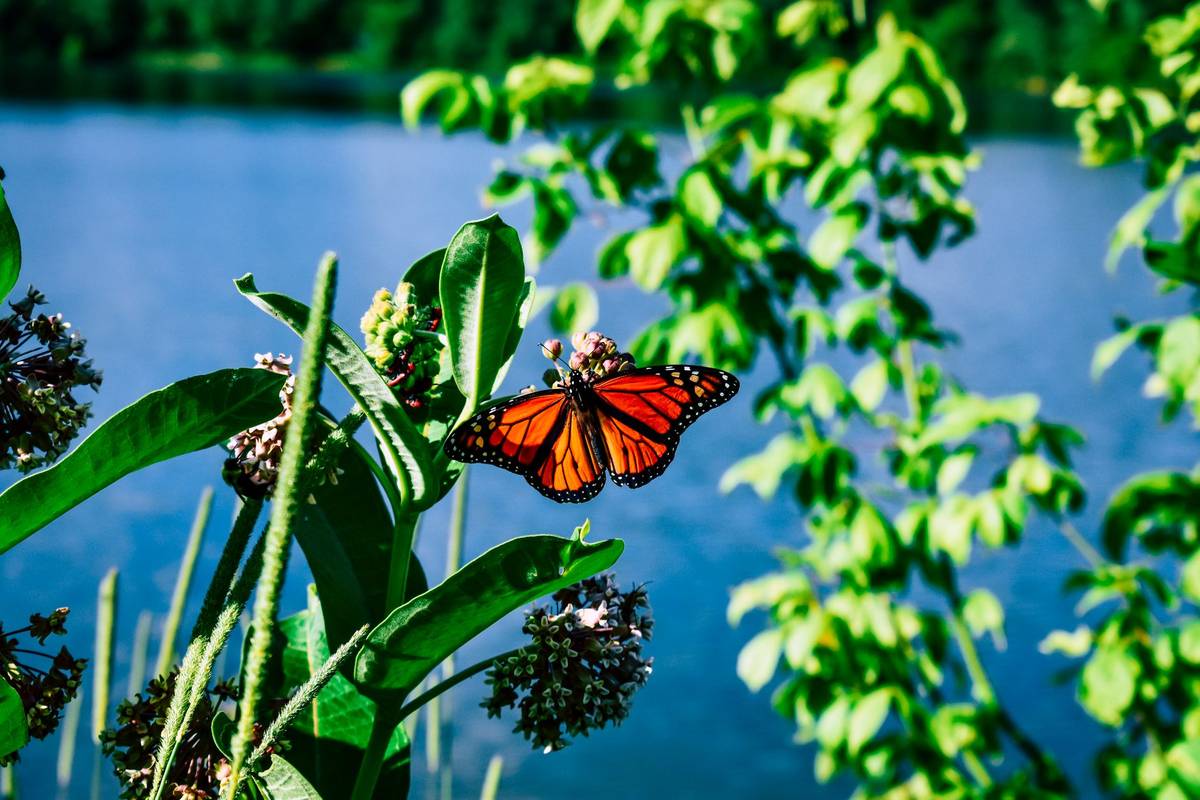
The strips of grass that run alongside rural highways are usually an afterthought — mowed, ignored, and rarely thought of as habitat. In North Florida, a team of scientists is trying to change that, one milkweed at a time. Their goal is to hand-plant 15,000 of the flowering plants along roadsides, creating a chain of pollinator pit stops for monarch butterflies and other insects.
The effort is part of a wider initiative led by the University of Illinois Chicago to convert the overlooked corridors beside roads, power lines and rail tracks into functioning habitat. In Florida, the work is directed by Jaret Daniels, curator of Lepidoptera at the Florida Museum of Natural History, whose lab selects, grows, plants and monitors each batch of milkweed. Early signs are encouraging: the team reports strong plant survival and has already spotted monarchs using the new stands in the field.
The reasoning is pragmatic. Milkweed is the only plant on which monarchs lay their eggs — their caterpillars eat nothing else, storing the plant's toxins to make themselves unpalatable to predators. As farmland and development erode wild habitat, roadsides offer a rare expanse of land that is already managed. "We don't have enough conservation lands to maintain pollinator populations," Daniels notes, so the plan is to make the land humans already tend do double duty.
Government partners have signed on. In 2024 the Florida Department of Transportation joined a voluntary conservation agreement for the monarch, committing to manage roughly 10,200 acres — about 16 square miles — of roadside land with pollinators in mind. A $150,000 grant awarded in 2023 funded an initial 9,000 milkweeds over three years; it has since been extended through 2029 to add 6,000 more. The team favours hardy native species such as pinewoods milkweed and butterfly weed, chosen to thrive in Florida's sandy soils.
The stakes reach far beyond one state. Adult monarchs can cover more than 100 miles in a single day during migration, and every stretch of flowering verge is a chance to refuel. Multiply enough roadside gardens across the continent, and an insect in steep decline gains a corridor that gives it a fighting chance.