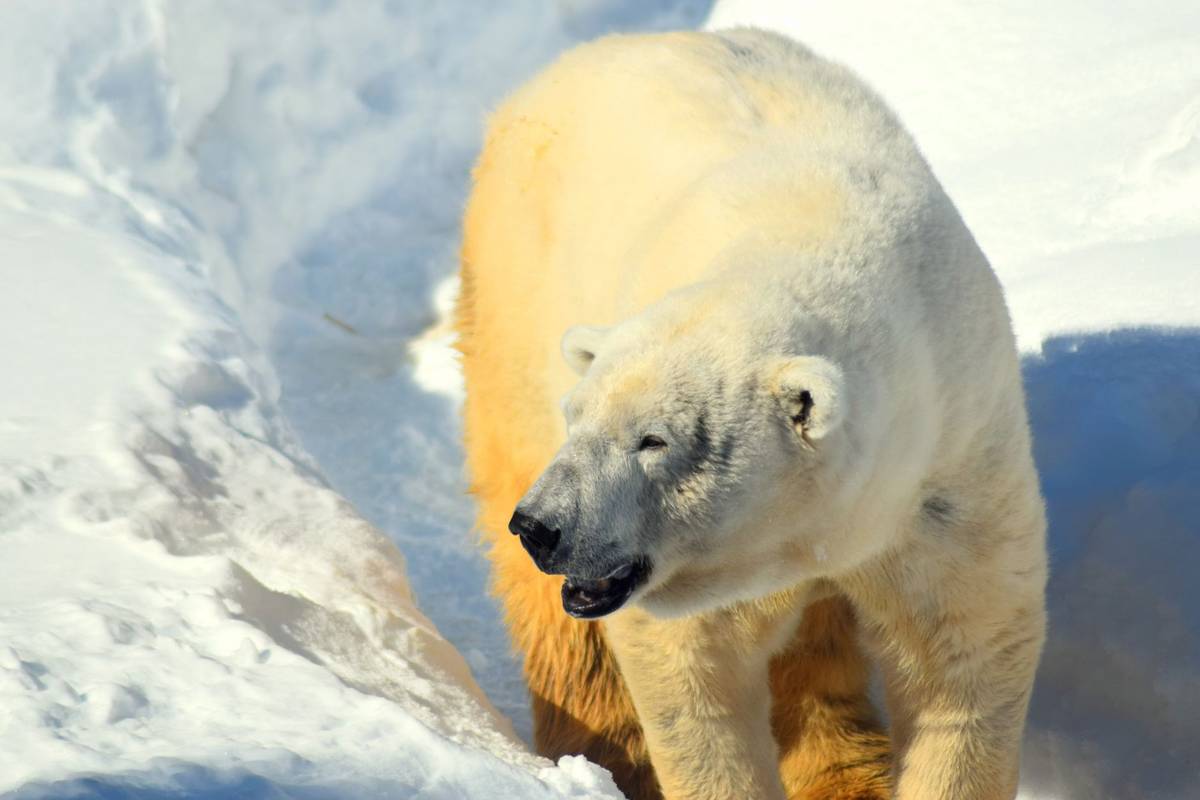
At a weather station on the north-west tip of Ellesmere Island, the nearest thing to a polar bear early-warning system used to be a person looking out of a window. "You can only look in so many directions at once," Elbert Bakker of the non-profit Polar Bears International told CBC News.
Earlier this year, a radar did the looking instead. The system — inevitably nicknamed bear-dar — picked up an adult female and two cubs moving toward the Environment and Climate Change Canada station at Eureka, Nunavut, and alerted the staff. They used vehicles to escort the animals away from the camp and back onto the sea ice, then followed them on camera. The next day the bears were recorded hunting seals. Polar Bears International says it was the first time the technology had headed off a potential conflict with polar bears; until then it had only flagged wolves.
That outcome is the point, and it cuts both ways. "With an early-warning detection system, there's less chance of a bear getting killed because it surprised somebody," said Alysa McCall, the group's director of science.
Teaching a radar what a bear looks like
The tool was built with Spotter Global, a US firm whose background is in security and military sensing. Radar panels roughly the size of an iPad sweep from a few hundred metres out to about 1.2 kilometres, paired with cameras that swivel and zoom in on whatever moves, so a human can confirm what the machine thinks it has found. Alerts can be sent to a phone or an email, or wired to a strobe or a noise-maker to move a bear along remotely, according to Geoff York, a senior director at the organisation.
The hard part was the AI. "There's not a ton of polar bear footage out there," McCall said, so the team took the system to a zoo in Winnipeg and let the algorithm watch captive bears until it could pick them out from everything else on a landscape.
The need is growing because the ice is not. As Arctic sea ice retreats, bears spend more time ashore searching for food, which brings them closer to the people who live and work there. Eureka is the first and farthest-north installation; the developers, who tested earlier versions in Churchill, Manitoba, now want to make the system cheap enough for Arctic communities to adopt — though Bakker concedes that a spread-out town is a harder problem than a single station.