Earthquakes are the loud way a fault releases stress. There is also a quiet way: rock can slide past rock for hours, days, sometimes months without a seismometer registering anything at all. A team led by Zahra Zali at the GFZ Helmholtz Centre for Geosciences in Potsdam has now made a large number of these silent movements visible – using a self-learning algorithm and measurements that had been sitting in the archive for years without anyone able to decipher them. The results appear in Nature Communications.
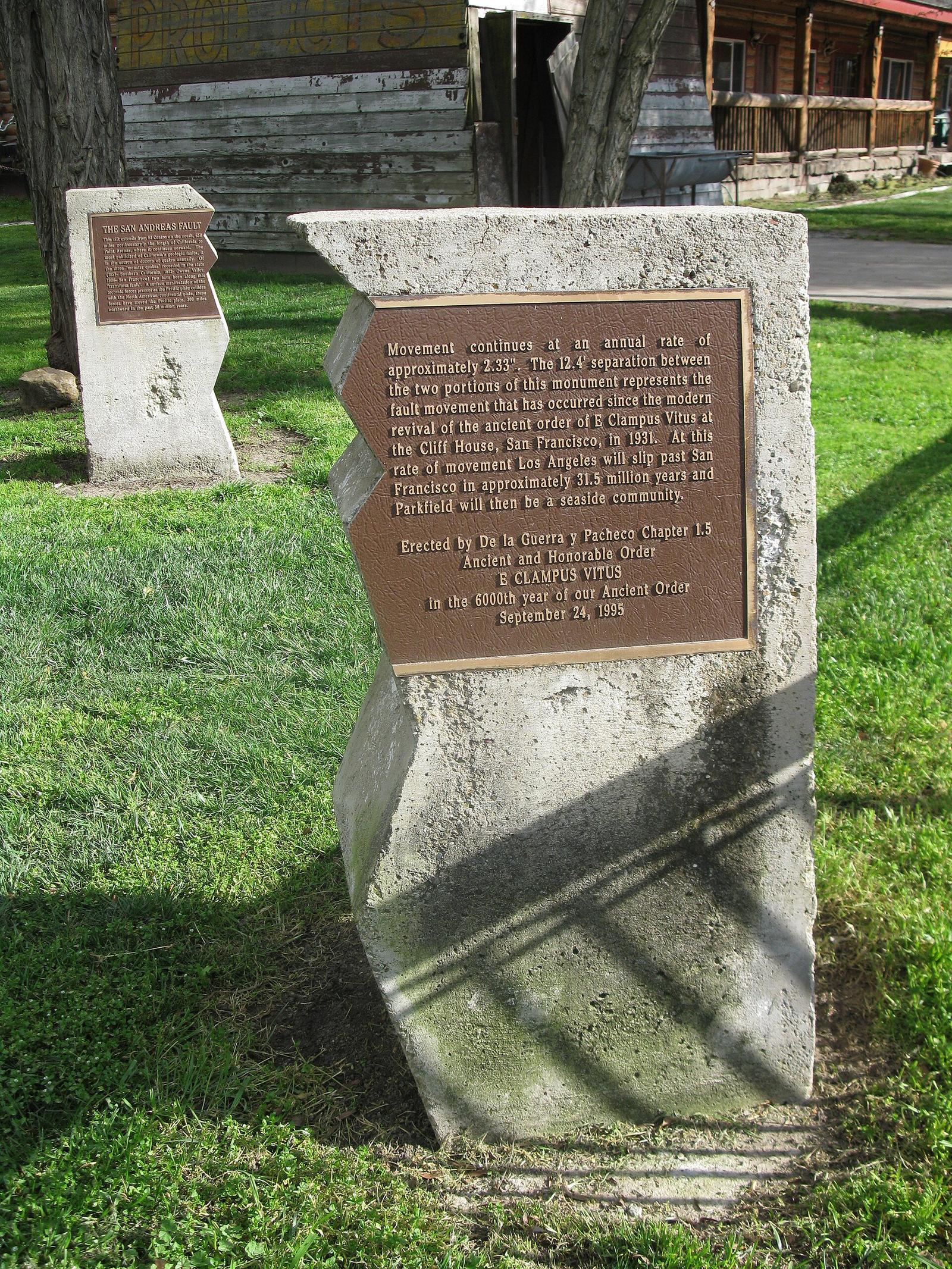
The researchers studied the stretch near Parkfield, a settlement halfway between San Francisco and Los Angeles that sits directly on the San Andreas Fault and has served for decades as an open-air laboratory for earthquake science. Despite that dense instrument network, slow movements had remained largely invisible. Their signals are tiny, and they disappear between long-term deformation trends, environmental effects and instrument noise.
Zali's team analysed roughly eight years of continuous data from four borehole strainmeters, recorded between 2009 and 2016. These instruments register the smallest deformations of the Earth's crust, filling a gap between what seismometers and GPS sensors can capture. Rather than searching for predefined signal shapes, the model learned directly from the stream of data and grouped similar deformation patterns together. "Artificial intelligence allowed us to recognize their patterns that would otherwise have gone unnoticed," Zali explains.
What the machine found
The result is the first catalogue of short slow-slip events at Parkfield, each lasting only a few hours, derived purely from continuous strain measurements. Dozens of such events emerged. Independent readings from nearby creepmeters supported the finding. The location and direction of the movement fit the fault's known behaviour: shallow depth, right-lateral motion.
The genuinely interesting part came from the comparison with seismicity. The silent slips were systematically followed by an increase in a particular class of faint tremors known as low-frequency earthquakes – counted here within ten kilometres and down to twenty kilometres depth. "Our results show that these earthquakes in slow motion are not isolated phenomena," says co-author Patricia Martínez-Garzón of the GFZ, adding that slow sliding plays an important role in how stress conditions develop along active faults.
None of this predicts an earthquake. The United States Geological Survey still states plainly that no one can predict a major quake. What the study delivers is something more fundamental: a method for observing a part of the earthquake cycle that was barely measurable before – and a pointer to where real early warning signs might be sought. Alongside the GFZ, David Mencin of EarthScope and Gregory C. Beroza of Stanford University took part in the work. Strainmeters stand at other faults around the world, too, and the data already exist.