Between the stars it is cold and very nearly empty – and yet, over millions of years, a surprisingly rich chemistry has accumulated there. Just how rich is clear from a discovery presented in the journal Nature Astronomy by a team led by Izaskun Jiménez-Serra of Spain's Centre for Astrobiology (CAB): in the molecular cloud G+0.693−0.027, near the centre of the Milky Way and roughly 26,700 light years away, the researchers have tracked down the simple sugar erythrulose. It is the first detection of a true sugar in the interstellar medium.
For the question of how life began, this is more than a curiosity. Sugars form the backbone of DNA and RNA, they supply energy and they drive cellular metabolism. The problem: under the conditions of the early Earth, laboratory experiments yield monosaccharides only in traces – far too little to account for the first molecules of heredity. The fact that ribose and glucose have already turned up in meteorites and in samples from the asteroid Bennu fed the suspicion that part of Earth's sugar supply arrived from outside. What was missing for that idea was the decisive link: sugar in interstellar space itself.
Chemistry against intuition
What surprises is less the find than its form. Erythrulose has four carbon atoms – and is at least eight times more abundant in the cloud than the smaller three-carbon sugars, which do not show up at all despite a highly sensitive search. That contradicts the common assumption that interstellar molecules grow step by step, one carbon atom at a time. The team's quantum-chemical calculations and astrochemical models point to a different route: on the icy surfaces of dust grains, two molecules with two carbon atoms each – glycolaldehyde and ethylene glycol – join directly into the four-carbon version.
"This chemistry is weird and unexpected," chemist Brett McGuire of the Massachusetts Institute of Technology, who was not involved in the study, told the magazine Chemical & Engineering News. It runs counter to chemical intuition, he said – and for exactly that reason opens up a new field of research.
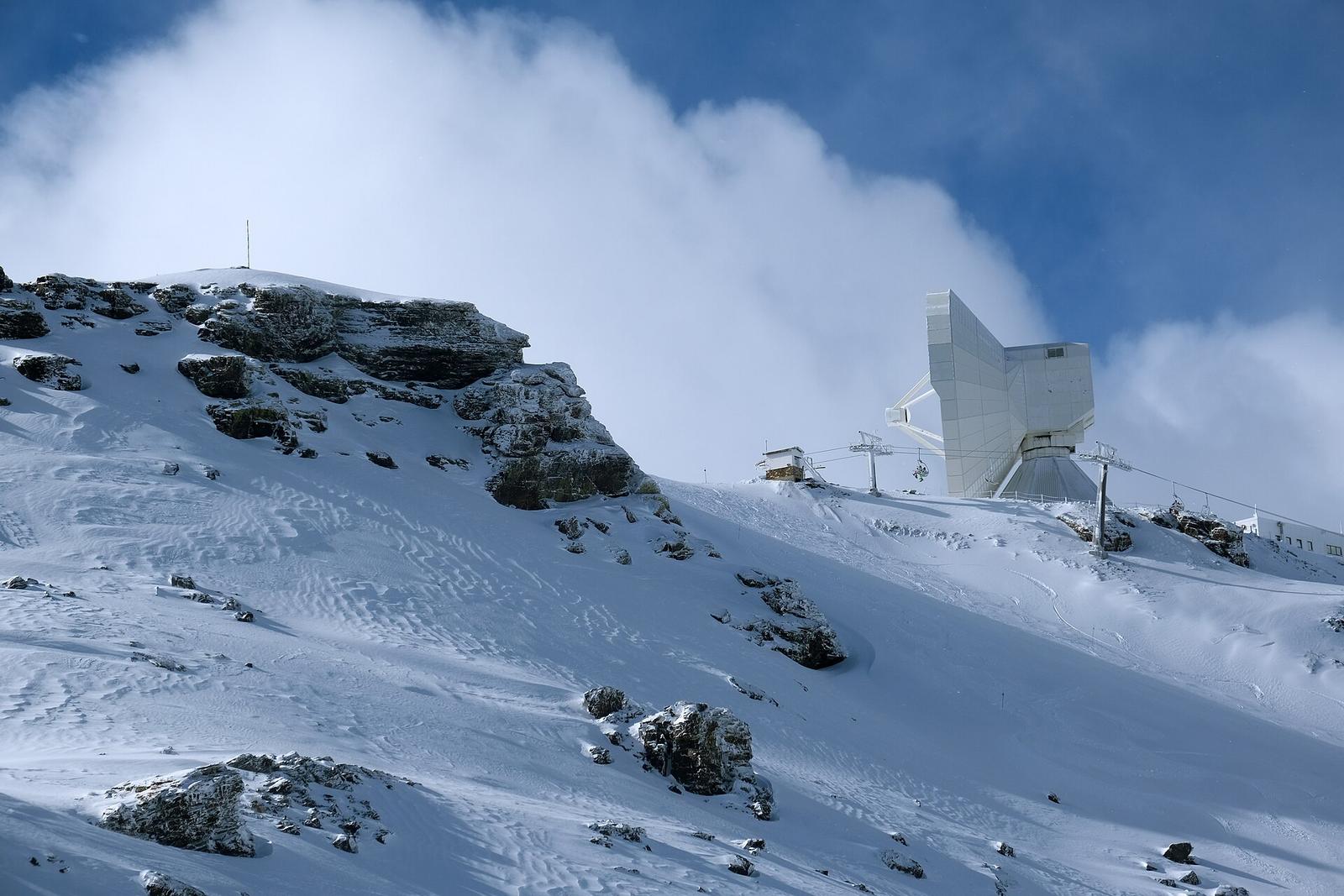
The sugar was identified through its rotational spectrum, a kind of molecular fingerprint. To that end the team first measured erythrulose's spectrum in a laboratory at the University of the Basque Country – tricky, because sugars break down when vaporised; only mixing in talc brought the molecules intact into the gas phase. The researchers then searched for that pattern in observations from the 40-metre radio telescope at Yebes and the 30-metre telescope of IRAM. Twelve groups of lines matched; for the six clearest signals, the probability of a chance coincidence is 0.2 percent.
Erythrulose is also chiral, meaning it comes in two mirror-image variants – only the second chiral molecule ever found in the interstellar medium. And because ketoses such as erythrulose readily convert into aldoses in watery surroundings, sugar from space may have contributed to the reservoir from which metabolism and heredity emerged on the young Earth. The odds of finding further molecules – among them ribose, a building block of genetic material – have just improved.